
How to Measure Carbonation
How to measure carbonation accurately is a key concern in the beverage industry, where product quality, shelf life, and consumer satisfaction depend heavily on maintaining the right CO₂ levels. Whether producing soda, beer, sparkling water, or carbonated juices, consistent carbonation ensures the drink tastes fresh, fizzy, and meets regulatory requirements.
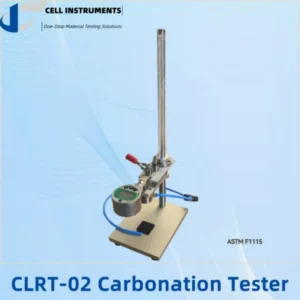
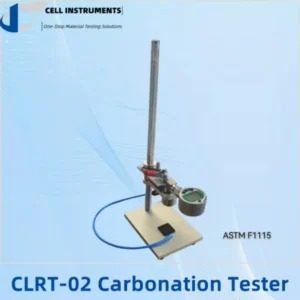
This article explores the carbonation testing process, introduces the ASTM F1115 standard, and explains how professional instruments like the Cell Instruments CLRT-02 Carbonation Tester can help laboratories and quality control departments improve their testing workflows.
Carbonation Tester, ASTM F1115, and Accurate CO₂ Volume Evaluation
To understand how to measure carbonation, one must first understand the relationship between pressure, temperature, and dissolved CO₂ volume. Carbonation refers to the amount of carbon dioxide dissolved in a beverage under pressure. This is typically expressed in volumes of CO₂ per volume of liquid (e.g., 2.5 volumes).
ASTM F1115 outlines standard procedures for measuring CO₂ volumes in beverage containers using a carbonation tester, like the CLRT-02 model. The test involves:
-
Piercing the sealed bottle cap with a needle-like probe
-
Opening a vent valve to release excess pressure or trapped gas
-
Shaking the bottle vigorously to equilibrate the CO₂ in the liquid
-
Measuring pressure using a calibrated, high-precision gauge
-
Measuring liquid temperature simultaneously
-
Calculating CO₂ volume using standardized carbonation tables
Why Measuring Carbonation Is Crucial in the Beverage Industry
Measuring how much carbonation a product holds directly impacts several business and technical factors:
Product Consistency: Uniform carbonation across batches ensures that every bottle or can delivers the same consumer experience.
Shelf Stability: Proper CO₂ levels delay microbial growth and help preserve freshness.
Packaging Integrity: Over-carbonated beverages can rupture containers or cause seal failures; under-carbonated ones lose appeal.
Regulatory Compliance: Standards such as ASTM F1115 are recognized globally for verifying gaseous content in sealed beverages.
For instance, in sparkling water or cola production, failing to control CO₂ levels can result in loss of fizziness, foam overflow, or consumer dissatisfaction.
Technical Highlights of the Cell Instruments CLRT-02 Carbonation Tester
If you’re looking to implement or upgrade carbonation testing in your facility, the CLRT-02 Carbonation Tester from Cell Instruments is a precise, laboratory-grade solution. Designed in line with ASTM F1115, it provides:
High-resolution pressure gauge (up to 0.0001 MPa) for precise readings
Multi-unit conversion to match global testing needs
Manual shaking mechanism, replicating standard procedures reliably
Anti-leakage system and durable piercing needle for repeated use
Vent valve with control pipe for gas release under controlled conditions
Compatibility with bottles up to 350 mm (custom sizes available)
These features make the CLRT-02 ideal for R&D, production, or third-party testing organizations that demand repeatability and precision.
Best Practices for Measuring Carbonation Using ASTM F1115
To achieve accurate and consistent results when using a carbonation tester, consider the following practices:
Always calibrate the pressure gauge periodically to ensure accuracy
Record temperature and pressure simultaneously to avoid result skew
Ensure stable shaking duration (usually 40 seconds) for equilibrium
Use clean, undamaged bottles for reproducibility
Refer to the carbonation volume chart (based on temp & pressure) rather than estimating manually
By following these steps, quality control teams can quantify carbonation reliably.
Conclusion
Knowing how to measure carbonation accurately is more than just a technical task—it’s a strategic component of beverage quality assurance. By following the ASTM F1115 method and using reliable equipment like the Cell Instruments CLRT-02 Carbonation Tester, manufacturers can ensure that every product that reaches the market is safe, consistent, and enjoyable.
Whether you’re in R&D, production, or third-party validation, investing in a high-quality carbonation tester and following industry standards is essential for success in today’s competitive beverage industry.
 EN
EN  AR
AR  BG
BG  CS
CS  DA
DA  DE
DE  EL
EL  ES
ES  ET
ET  FI
FI  FR
FR  HU
HU  ID
ID  IT
IT  JA
JA  KO
KO  LT
LT  LV
LV  NB
NB  NL
NL  PL
PL  PT
PT  RO
RO  RU
RU  SK
SK  SL
SL  SV
SV  TR
TR  UK
UK