
NF T54-116
Film Pendulum Impact Test
The NF T54-116 standard defines a reliable method for measuring the impact resistance of plastic film using a pendulum shock test. It is especially valuable for evaluating the performance of flexible films used in packaging, pharmaceuticals, electronics, și medical device materials. By using this method, manufacturers can determine how well a film resists sudden impacts that could lead to rupture or puncture during handling, transporta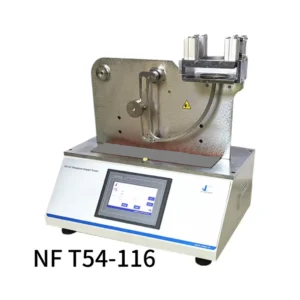 tion, or use.
La Instrumente celulare, we specialize in offering advanced film pendulum impact testers, such as the PIT-01, that meet NF T54-116 and global standards like ASTM D3420. In this article, you’ll learn what NF T54-116 entails, how the test is performed, and why it’s essential for quality control.
Film Pendulum Impact Tester and Related Standards
The aparat de testare a rezistenței la impact cu pendul pentru folii is designed to simulate mechanical shock on thin plastic sheets by measuring the energy required to puncture them. The pendulum impact resistance of plastic film is a critical property that reflects the material’s ability to withstand real-world conditions.
NF T54-116 is frequently used alongside international standards, including:
-
ASTM D3420 – Standard Test Method for Pendulum Impact Resistance of Plastic Film
-
Spencer Impact Test – Used in North American labs and often performed using spencer impact testing equipment
-
GB/T 8809 – China’s national standard for film impact resistance test
These standards, although varied in procedures, all aim to assess film pendulum impact resistance to support product development, compliance, and quality assurance.
How the NF T54-116 Pendulum Shock Test Works
NF standard specifies the use of a pendulum impact test system that incorporates a hemispherical striker and a rigid specimen clamping mechanism. Here’s how the method works:
Test Principle:
-
A film sample (100×100 mm or Ø100 mm) is clamped securely using pneumatic or manual fixtures.
-
A pendulum, fitted with a hemispherical impact head (usually Ø38.1 mm), swings from a predetermined height.
-
The pendulum hits the center of the specimen, and the energia absorbită is calculated from the difference in swing angle before and after impact.
Energy Measurement:
The result, in joules, is normalized against the film’s thickness to determine its specific resistance to perforation. The goal is to ensure that the pendulum impact resistance test reflects realistic material performance.
Visual Inspection:
In addition to numeric values, the appearance of the perforation is also noted—whether the film tears cleanly, stretches, or shatters.
Why Use Film Pendulum Impact Testing?
Film impact resistance testing is essential for materials used in high-performance applications. It is widely adopted in industries such as:
-
Ambalaje flexibile: Ensures pouch, sachet, and blister durability during transport.
-
Dispozitive medicale: Validates the structural integrity of sterile barrier systems.
-
Alimente și băuturi: Tests multi-layer films and laminates for shipping stress.
-
Automobile și electronică: Evaluates composite membranes and protective films.
Manufacturers must ensure that materials will not fail under mechanical stress. This makes pendulum impact resistance tests a standard quality control procedure in R&D and production.
PIT-01 Pendulum Impact Tester: Trusted Solution from Cell Instruments
For accurate, repeatable film pendulum impact testing, Cell Instruments’ PIT-01 is a preferred choice. The PIT-01 is engineered in strict accordance with NF T54-116, ASTM D3420, și GB/T 8809.
Caracteristici principale:
-
Multiple impact energies: 1 J, 2 J, 3 J, and optional 5 J
-
Hemispherical heads: Ø25.4 mm, Ø19 mm, Ø12.7 mm
-
High-accuracy energy resolution: 0.001 J
-
Auto-release pendulum with real-time energy reading
-
Pneumatic clamping for consistent test conditions
-
Touchscreen HMI and integrated statistical reporting
PIT-01 helps R&D teams and quality assurance professionals assess the pendulum impact resistance of plastic film with confidence. It also simplifies compliance with astm standards for impact testing of plastics și spencer impact test requirements.
How to Perform a Film Impact Resistance Test Based on NF T54-116
1. Pregătirea probei
Cut 10 test specimens (100×100 mm or Ø100 mm). Condition them at 23 ± 2°C and 50% RH for at least 2 hours.
2. Machine Setup
Calibrate the aparat de testare a rezistenței la impact cu pendul pentru folii, zero the pointer without a specimen, and select the appropriate impact head and counterweight.
3. Clamping
Use pneumatic clamping to secure the specimen in a horizontal plane. Ensure pressure is stable and centered.
4. Impact Testing
Release the pendulum. It strikes the specimen at a fixed energy level, and the energia absorbită during perforation is automatically recorded.
5. Data Recording
Log the absorbed energy, calculate specific resistance (J/μm), and observe the perforation type: brittle or ductile. Repeat for all specimens.
6. Report Results
Your test report should include:
-
Mean and standard deviation of absorbed energy
-
Type of failure
-
Environmental conditions
-
Equipment configuration
-
Full specimen identification
Conclusion: Reliable Testing for Safer, Stronger Films
The NF T54-116 film pendulum impact test is essential for validating the durability and toughness of plastic sheets used in sensitive and demanding environments. It not only ensures regulatory compliance but also helps prevent packaging failures that could compromise product safety.
With advanced solutions like the PIT-01 Pendulum Impact Tester de la Instrumente celulare, laboratories and manufacturers can carry out pendulum impact resistance tests with unmatched accuracy and efficiency.
Get in touch with Cell Instruments to explore how the PIT-01 can enhance your material testing capabilities and ensure your films meet global performance standards.
 RO
RO  EN
EN  AR
AR  BG
BG  CS
CS  DA
DA  DE
DE  EL
EL  ES
ES  ET
ET  FI
FI  FR
FR  HU
HU  ID
ID  IT
IT  JA
JA  KO
KO  LT
LT  LV
LV  NB
NB  NL
NL  PL
PL  PT
PT  RU
RU  SK
SK  SL
SL  SV
SV  TR
TR  UK
UK