
Needle Sharpness and Penetrability Test

Adatu asuma pārbaude

In the world of medical device manufacturing, needle sharpness testing is a critical quality control step that ensures the safe and effective use of needles in clinical applications. Whether used for injections, suturing, or drug delivery, a needle’s performance heavily relies on its sharpness. Poorly manufactured or dull needles can lead to patient discomfort, tissue trauma, and reduced treatment effectiveness.

For manufacturers and quality control professionals, understanding the principles of sharpness and needle penetrability testing—particularly in compliance with ISO 7864, ISO 11040-4, and ISO 8871-5—is essential. This article outlines the test methods, importance, and instrumentation related to needle performance testing, guiding you through essential practices for achieving reliable, compliant results.


Why Needle Sharpness Testing Matters

Medical professionals rely on sharp, precise needles to minimize discomfort, reduce tissue damage, and ensure effective penetration. A poorly manufactured needle increases the insertion force, leading to:

  • Patient pain and fear

  • Delayed healing due to tissue trauma

  • Lowered accuracy during drug administration

  • Reduced trust in medical devices

Thus, needle sharpness testing isn’t just about comfort—it’s about ensuring clinical safety, performance consistency, and meeting international regulatory standards.


Test Standards for Needle Sharpness and Penetrability

To accurately evaluate needle performance, global standards provide clear test methods:

Needle Penetrability Test for Rubber Stoppers – ISO 11040-4, ISO 7864, ISO 8871-5

ISO 11040-4 un ISO 7864 describe standardized penetrability tests for rubber stoppers and hypodermic needles. These tests simulate real-world puncture scenarios where needles must pierce rubber vial closures or similar materials under controlled conditions.

  • Insertion Force Measurement: Needles are inserted into a rubber or synthetic test substrate using a constant-speed compression system.

  • Substrate Characteristics: Materials may include latex (40 ± 5 Shore A), polyurethane, silicone rubber, or LDPE film to replicate medical-grade rubber stoppers.

  • Data Output: The test measures peak penetration force (initial break force) and gliding friction throughout the needle’s insertion.

These standardized tests help determine:

  • Whether the needle tip is sufficiently sharp

  • How consistent the manufacturing process is

  • Compatibility between needle and rubber closure


Equipment and Setup for Needle Sharpness Testing

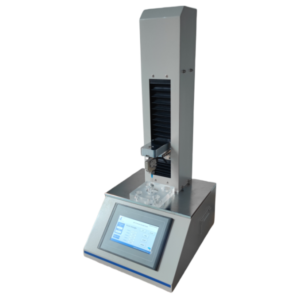
Cell Instruments’ Needle Sharpness Tester provides precision testing aligned with ISO and ASTM standards. It includes:

  • Force measurement system: Load cell capable of capturing forces as low as 0.01 N with a high-resolution output

  • Programmable speed control: Maintains the ISO-specified 100 mm/min test speed

  • Substrate holder: Secures test materials with a defined penetration window (typically 10 mm diameter)

  • 7-inch HMI interface: Enables intuitive test setup and real-time force-displacement curve analysis

With support for multiple needle gauges, plunger types, and stopper designs, the system is also highly customizable for specialized R&D and QA applications.


Benefits of Complying with ISO 7864 and Related Standards

  • Improved Product Safety: Ensures needles perform reliably under clinical conditions

  • Minimized Patient Trauma: Optimizes needle design for less painful insertions

  • Manufacturing Consistency: Validates tip geometry, surface finish, and production repeatability

  • Global Regulatory Compliance: Meets FDA, EU MDR, and international audit requirements


Key Considerations in Penetrability Test for Rubber Stoppers

Needle sharpness testing and penetrability test for rubber stoppers are standardized in ISO 7864 for injection needle puncture force requirements, while ISO 11040-4 specifies penetrability tests for prefilled syringe systems, complemented by ISO 8871-5 for elastomeric closure material properties。
Needle Sharpness Tester

As outlined in ISO 11040-4, testing is not limited to the needle itself—it extends to rubber stoppers and vial closures. Manufacturers of pre-filled syringes and injectable drug containers must ensure that needle-stopper interaction does not compromise drug integrity or administration.

Key parameters include:

  • Stopper hardness and elasticity

  • Force required to penetrate without coring

  • Seal integrity post-penetration

Cell Instruments’ systems support both needle and stopper testing, offering unified solutions for end-to-end syringe validation.


Who Should Use Needle Sharpness Testing Equipment?

  • Medical device manufacturers

  • Syringe and needle OEMs

  • Pharmaceutical packaging suppliers

  • Third-party quality inspection labs

  • R&D centers developing novel drug delivery systems


Conclusion

As injectable therapies continue to evolve, the role of needle sharpness testing in ensuring device safety and performance becomes more critical than ever. By complying with ISO 7864, ISO 11040-4, and ISO 8871-5, and by using reliable test instrumentation like the Needle Sharpness Tester from Cell Instruments, manufacturers can improve quality assurance, reduce patient discomfort, and maintain global compliance.

For technical consultations, product customization, or demo requests, please visit Šūnu instrumenti or contact our sales engineers directly.
Adatu asuma pārbaude

Needle sharpness testing plays a crucial role in ensuring the precision and safety of various medical needles, including surgical needles, hypodermic needles, syringe needles, and acupuncture needles. Sharpness is not just a matter of comfort but also critical for patient safety and accurate performance.

Why Needle Sharpness Testing Matters

Needles are fundamental tools in medical and therapeutic procedures. Whether it’s a surgical needle for suturing, a hypodermic needle for injections, or an acupuncture needle for therapeutic treatments, needle tip sharpness significantly influences insertion force, patient comfort, and tissue trauma. Inadequately sharp needles can lead to:

  • Increased insertion force, causing discomfort and pain
  • Greater tissue damage and slower healing
  • Reduced control for medical professionals
  • Decreased effectiveness of medical treatments

Therefore, needle sharpness testing is a vital quality control step in needle manufacturing and usage.

Testing Methods for Needle Sharpness

Sharpness is typically measured by the force required for the needle tip to penetrate a standardized material. The ASTM F3014-14 Standard Test Method for Penetration Testing of Needles Used in Surgical Sutures is widely adopted for evaluating the sharpness of surgical needles. This test measures the maximum force needed to penetrate a defined material, simulating the experience of needle penetration into tissue.

For hypodermic needles un syringe needles, ISO 7864:2016 outlines specific requirements and test methods. It includes penetration force testing and visual inspections to ensure needle tips are consistently sharp and defect-free.

In the case of prefilled syringe needles, ISO 11040-4:2024 specifies testing for glass barrels and sterilized subassembled syringes, ensuring sharpness consistency and structural integrity. This standard ensures that even after sterilization, needle tips remain sharp and functional.

For acupuncture needles, ISO 17218:2014 addresses sterile single-use acupuncture needles. This standard outlines sharpness testing to minimize patient discomfort and ensure safe, effective treatments.

Key Aspects of Needle Sharpness Testing

Effective needle sharpness testing involves:

  • Precise force measurement: Measuring the force needed for penetration using calibrated equipment
  • Consistent test conditions: Standardized materials and environmental conditions ensure repeatable results
  • Data analysis: Monitoring sharpness variations across batches for quality control

Cell Instruments provides reliable testing solutions for these needs. The Cell Instruments Needle Sharpness Tester is engineered to deliver precise, repeatable measurements, meeting ASTM F3014, ISO 7864, and related standards.

Benefits of Using the Cell Instruments Needle Sharpness Tester

Needle Sharpness Testing for Many Types of Needles

Portāls Cell Instruments Needle Sharpness Tester offers:

  • High-precision force sensors for accurate testing
  • User-friendly interface for easy operation
  • Compliance with ASTM and ISO standards, ensuring reliable data
  • Customizable test methods to meet specific application needs

By integrating this advanced tester into your quality control process, you can ensure that your surgical needles, hypodermic needles, syringe needles, and acupuncture needles meet the highest standards for patient care and product reliability.

Ensuring Compliance with International Standards

Compliance with global standards is essential for manufacturers and healthcare providers. The following standards guide needle sharpness testing:

  • ASTM F3014: Measures penetration force of surgical suturing needles
  • ISO 7864: Specifies requirements for sterile hypodermic needles for single use
  • ISO 11040-4: Addresses glass barrels and sterilized subassembled syringes
  • ISO 17218: Ensures sterile acupuncture needles meet safety and sharpness standards

Adhering to these standards not only ensures product quality but also demonstrates a commitment to safety and patient well-being.

Applications of Needle Sharpness Testing

Needle sharpness testing has broad applications in industries such as:

  • Medical device manufacturing (e.g., syringe and suture needle production)
  • Pharmaceutical packaging (ensuring container closure integrity)
  • Acupuncture and therapeutic treatments (patient safety and comfort)
  • Quality control for healthcare providers

Cell Instruments’ testing solutions are tailored for these industries, offering accurate, reliable data to support quality assurance and regulatory compliance.

Needle sharpness testing is critical to ensuring that surgical needles, hypodermic needles, syringe needles, and acupuncture needles meet global standards for safety and performance. With advanced solutions like the Cell Instruments Needle Sharpness Tester, manufacturers and quality control professionals can confidently maintain high standards, reduce patient discomfort, and enhance product reliability.

For more information about needle sharpness testing solutions, please visit Šūnu instrumenti and explore how our products can help you meet stringent industry requirements while delivering superior results.

购物车
lvLV

Nepieciešama testa metode vai cenu piedāvājums.

Atstājiet mums ziņu, un mēs atbildēsim pēc iespējas ātrāk!