
Lab Valley Beater: Controlled Refining for Accurate Pulp Analysis
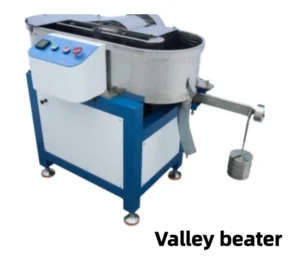 In the world of paper production and research, the Valley Beater stands out as a critical instrument for pulp testing. Designed to provide precise and reproducible results, the Valley Beater allows laboratories and quality control personnel to simulate industrial refining processes on a smaller, controlled scale. This controlled mechanical treatment of pulp is essential for understanding fiber behavior, sheet formation, and overall paper quality, particularly when complying with internationally recognized standards such as TAPPI-T200 ir ISO 5264.
Svetainė lab Valley Beater is specially engineered to refine pulp with consistent mechanical action. Unlike industrial refiners, it applies controlled compression and shear forces in a laboratory setting, making it possible to measure pulp properties without the variability introduced by large-scale production systems. By evaluating pulp at this scale, researchers can predict how the material will perform during commercial paper production, ensuring higher efficiency and reduced waste.
Principle of Operation and Fiber Refinement
The Valley Beater operates by applying repeated mechanical actions to pulp fibers, compressing and shearing them between a rotating roll and a stationary bedplate. This process:
-
Enhances fiber flexibility and fibrillation.
-
Increases bonding surfaces for improved sheet strength.
-
Produces uniform pulp suitable for laboratory testing and quality assurance.
During refining, fiber wall thickness decreases, and surface area increases, directly impacting paper formation, tensile strength, and porosity. Controlled laboratory refining ensures accurate assessment of these critical parameters, helping professionals make informed decisions about pulp treatment and paper formulation.
Standards Compliance: TAPPI-T200 ir ISO 5264
Using the Valley Beater pagal TAPPI-T200 ir ISO 5264 ensures that laboratory tests are standardized and internationally comparable. TAPPI-T200 specifies laboratory beating of pulp, defining methods to prepare and evaluate pulp consistency, while ISO 5264 provides guidance on test procedures for small-scale pulp refining. Adhering to these standards guarantees reliable, reproducible results for pulp evaluation and supports quality control protocols across various industries.
Taikymas įvairiose pramonės šakose
The Valley Beater is widely used in multiple sectors:
-
Paper and Packaging: Optimizing refining conditions for consistent paper quality in packaging materials, tissues, and specialty papers.
-
Research Institutions: Studying fiber properties and simulating industrial refining to evaluate new pulp sources or formulations.
-
Quality Control Laboratories: Routine pulp testing, refining analysis, and standard compliance verification.
-
Specialty Paper Production: Precision fiber treatment for filter papers, technical papers, and other high-performance products.
By leveraging the Valley Beater, laboratories can ensure that pulp behaves predictably in downstream processing, leading to higher-quality paper products and reduced production variability.
Benefits of Laboratory-Scale Pulp Testing
-
Optimized Raw Material Usage: Controlled refining maximizes fiber utilization and minimizes waste.
-
Reliable Quality Assessment: Reproducible results reflect real-world papermaking performance.
-
Process Optimization: Early testing in the lab reduces trial-and-error in full-scale production.
-
Cost and Time Efficiency: Laboratory refinement helps identify optimal conditions, saving resources and reducing production downtime.
Kodėl verta rinktis "Cell Instruments Valley Beater?
Cell Instruments provides a high-precision Valley Beater designed for consistent laboratory testing. With robust construction, ease of operation, and compliance with TAPPI and ISO standards, it ensures reliable, reproducible results for pulp evaluation. Our team offers global support, including installation, training, and ongoing technical assistance, helping labs maintain high-quality standards and improve research and production outcomes.
Išvada
For any professional working with paper pulp, the Valley Beater is an indispensable tool. By following TAPPI-T200 and ISO 5264 standards, laboratories can achieve accurate fiber refinement, consistent pulp quality, and reliable predictive insights for industrial papermaking. Whether for research, quality control, or specialty paper production, the lab Valley Beater is a critical investment in precision, efficiency, and reproducibility.
Dažnai užduodami klausimai
Q1: What is a Valley Beater?
A Valley Beater is a precision laboratory instrument designed to refine pulp fibers. It simulates industrial pulp beating on a smaller scale, ensuring reproducible fiber properties and accurate lab testing.
Q2: What is the difference between a Valley Beater and a Hollander Beater?
The Hollander Beater is a traditional industrial design, whereas the Valley Beater is standardized for laboratory use. It provides controlled refining according to TAPPI-T200 and ISO 5264 standards for research and quality control.
Q3: Can a Lab Valley Beater test recycled pulp?
Yes. It can refine virgin, recycled, or mixed pulps, helping evaluate fiber properties and suitability for various paper products.
Q4: How much pulp is needed for a single test?
Typically, a Valley Beater test requires around 360 grams of oven-dry pulp, but this may vary depending on the test standard or experimental requirements.
Q5: How do I maintain a Valley Beater?
Regular cleaning and inspection of blades and the refining chamber are sufficient. Cell Instruments also provides technical support and maintenance guidance for optimal performance.
Q6: Why is pulp refining important in labs?
Proper refining affects fiber bonding, paper strength, porosity, and sheet formation. Lab-scale testing ensures consistent quality, reduces waste, and supports research and production optimization.
Q7: Are the Valley Beater results compliant with international standards?
Yes. The Valley Beater is fully compliant with TAPPI-T200 and ISO 5264 standards, ensuring reproducible and internationally recognized results.
 LT
LT  EN
EN  AR
AR  BG
BG  CS
CS  DA
DA  DE
DE  EL
EL  ES
ES  ET
ET  FI
FI  FR
FR  HU
HU  ID
ID  IT
IT  JA
JA  KO
KO  LV
LV  NB
NB  NL
NL  PL
PL  PT
PT  RO
RO  RU
RU  SK
SK  SL
SL  SV
SV  TR
TR  UK
UK