
ISO 1974 Rivhållfasthet hos papper
Elmendorfs tårmetod
ISO 1974 definierar den internationellt erkända metoden för att mäta rivhållfastheten hos papper med hjälp av Elmendorfs pendelsystem. Denna standard stöder noggrann utvärdering av rivhållfasthet för papper, ISO 1974 gör det möjligt för papperstillverkare, konverterare och laboratorier för kvalitetskontroll att kvantifiera hur ett ark beter sig när det utsätts för rivkrafter utanför planet. I branscher där körbarhet, hållbarhet och konverteringsstabilitet är viktiga, utgör en tydlig förståelse av ISO 1974 grunden för konsekvent materialprestanda och processoptimering.
Denna metod används ofta för tryckpapper, förpackningskvaliteter, mjukpapper, specialpapper och kartong med lågt grammage. Den är också direkt kopplad till kvalitetsindex som t.ex. rivindex, som kombinerar rivkraft med ytvikt för att uttrycka styrkeeffektivitet.
Pappers rivhållfasthet och dess betydelse vid testning enligt ISO 1974
Den Rivhållfasthet hos papper återspeglar hur väl ett ark står emot spridningen av en förskuren reva. Det är en kritisk indikator i tillämpningar som t.ex. förpackningslinjens prestanda, påsars och kuverts hållbarhet och tryckpressens tillförlitlighet. ISO 1974 ger ett strukturerat tillvägagångssätt för att mäta denna egenskap på ett sätt som minimerar operatörsinflytande och säkerställer global jämförbarhet.
ISO 1974 specificerar att testet använder fyra överlagrade ark med en initial slits. En pendel river arken över ett definierat avstånd och den energi som pendeln förlorar omvandlas till rivkraft. Denna direkta koppling mellan utfört arbete och materialmotstånd gör metoden tillförlitlig för olika papperstyper.
Elmendorf Tear Test - principer och mätmetoder
Den Elmendorfs tårtest är kärnan i ISO 1974. Dess metodik kretsar kring konsekvent mekanisk verkan och exakt kvantifiering av energiförlust.
Viktiga steg är bland annat:
- Beredning av tio provbitar från konditionerade prover
- Val av lämpligt pendelområde så att det förväntade medelvärdet ligger mellan 20% och 80% av fullt skalutslag
- Placera fyra ark i klämmorna och se till att slitsen är i linje med mitten
- Släppa pendeln för att driva tåren genom en kontrollerad sträcka
- Registrering av rivmotstånd eller skalavläsningar
- Bekräftelse på att avvikelsen håller sig inom tillåtna gränser
- Beräkning av rivhållfasthet per ark och, om så krävs, rivindex
Standarden innehåller också ekvationer för avläsning av direkt rivmotstånd samt för skalbaserade avläsningar med en pendelfaktor. Dessa beräkningar möjliggör utvärderingar av hållfasthet i maskinriktning och tvärriktning, vilket är viktigt för att diagnostisera fiberorientering och förbättra processförhållandena.
Test av rivhållfasthet för papper Tillämpningar inom olika branscher
Den test av rivhållfasthet för papper ger insikter som påverkar:
- Optimering av papperstillverkningsprocessen (slagningsgrad, fiberblandning, fyllmedel)
- Beslut om förpackningsdesign för påsar, kartonger och flexibla laminat
- Bedömning av tryckbarhet och kompatibilitet med utrustning
- Utvärdering av prestanda för mjukpapper och specialpapper
- Kvalitetssäkring av upphandling och validering av leverantörer
Eftersom rivbeteendet ofta korrelerar med fiberlängd och bindning hjälper resultaten från ISO 1974 produktionsteamen att hitta rätt balans mellan löpbarhet, styrka och kostnad.
Elmendorf Tear Strength Utrustning och överväganden vid val av utrustning
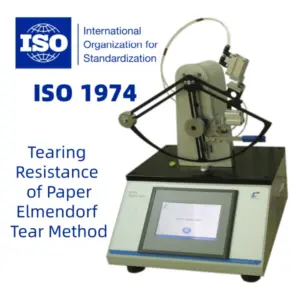
Exakt elmendorf rivstyrka resultat är beroende av väl utformad testutrustning. Laboratorierna söker allt oftare efter automatiserade system som förbättrar repeterbarheten, minskar de mänskliga felen och ger spårbar datautmatning.
- En modern digital pendeltestare förbättrar:
- Konsistens genom kontrollerade klämkrafter
- Precision genom automatiserad pendelutlösning
- Flexibilitet med flera pendelkapaciteter
- Effektivitet med beräkningar och statistik ombord
- Spårbarhet via mikroutskrift eller dataexport
För organisationer som söker en robust lösning i linje med ISO 1974, den Cellinstrument SLD-01 Provningsutrustning för rivning uppfyller de operativa och tekniska kraven. Den pneumatiska fastspänningen, PLC-baserade styrningen, den automatiska pendelfrigöringen och den valfria mjukvaruanalysen gör den lämplig för pappersbruk, förpackningskonverterare, forskningsinstitut och testlaboratorier för tredje part. Tillgången till flera olika pendelkapaciteter säkerställer kompatibilitet med ett brett utbud av rivhållfasthetsnivåer, inklusive höghållfasta förpackningskvaliteter och lättare specialpapper.
Vanliga frågor om ISO 1974
1. Vad är ISO 1974 och varför är det viktigt?
ISO 1974 är den internationella standard som definierar Elmendorfs metod för att mäta rivhållfastheten hos papper och kartong med låg gramvikt. Den är viktig eftersom den tillhandahåller ett globalt konsekvent förfarande som säkerställer tillförlitlig utvärdering av pappers rivhållfasthet, vilket stöder kvalitetskontroll, produktutveckling och benchmarking av leverantörer.
2. Vad mäter ISO 1974-testet?
ISO 1974-testet mäter pappers rivhållfasthet ut ur planet. Det kvantifierar den kraft som krävs för att sprida en påbörjad reva med hjälp av en pendelmekanism. De resulterande värdena hjälper till att bedöma fiberbindning, materialets hållbarhet, konverteringsprestanda och arkets totala styrka.
3. Vilka typer av material kan testas med hjälp av ISO 1974?
ISO 1974 gäller för ett brett spektrum av papperstyper, inklusive tryckpapper, förpackningspapper, mjukpapper, specialkvaliteter och kartong med lågt grammage. Om rivmotståndet ligger inom instrumentets kapacitet kan metoden användas med tillförsikt för rutinmässiga QC- och forskningsapplikationer.
4. Vilken utrustning krävs för att utföra ISO 1974?
Standarden kräver en rivprovare av Elmendorf-typ med lämpliga pendelkapaciteter. Moderna digitala instrument, som Cell Instruments SLD-01 Tearing Tester, erbjuder automatiserad pendelutlösning, pneumatisk fastspänning, flera kraftområden och inbyggd statistik för att förbättra testets repeterbarhet och driftseffektivitet.
5. Hur rapporteras resultaten från ISO 1974?
Resultaten redovisas vanligen som rivmotstånd per ark i millinewton, med separata värden för maskinriktning och tvärriktning. Om så krävs kan rivindex också beräknas genom att rivmotståndet divideras med ytvikten. Standarden rekommenderar rapportering med tre signifikanta siffror och dokumentation av eventuella avvikelser i provningsförfarandet.
 SV
SV  EN
EN  AR
AR  BG
BG  CS
CS  DA
DA  DE
DE  EL
EL  ES
ES  ET
ET  FI
FI  FR
FR  HU
HU  ID
ID  IT
IT  JA
JA  KO
KO  LT
LT  LV
LV  NB
NB  NL
NL  PL
PL  PT
PT  RO
RO  RU
RU  SK
SK  SL
SL  TR
TR  UK
UK