
ASTM D1922
Tear Testing
Introduction to ASTM D1922 Testing
ASTM D1922 is a widely recognized tear strength test method used to determine the force required to propagate a tear in plastic films and nonrigid sheeting. This method is essential for evaluating the mechanical integrity of packaging materials, especially in applications where resistance to tearing directly impacts product protection and shelf-life. The ASTM D1922 standard utilizes the Elmendorf tear strength testing approach to measure how much force is needed to continue a tear once initiated.
Plastic films used in flexible packaging, food containers, or medical devices are subjected to various handling stresses. As a result, assessing their tear resistance helps manufacturers and quality control professionals ensure compliance with durability specifications and safety standards.
Tear Strength Test Method Using Elmendorf Tear Tester
The ASTM D1922 test is performed using an Elmendorf-type tearing strength tester, such as the SLD-01 tearing strength tester by Cell Instruments. This pendulum-based device simulates real-world tearing events with controlled precision. Here’s how the procedure typically works:
- A pre-cut specimen is clamped between two jaws—one stationary and one on the swinging pendulum.
- When released, the pendulum tears the specimen along a 43 mm path.
- The tester measures the energy loss from the pendulum’s motion, which correlates with the tear force required to propagate the tear.
Tearing strength testers must be carefully calibrated using check weights or standardized procedures to ensure measurement accuracy, especially for materials with high anisotropy or elongation during tearing.
Key Factors Affecting ASTM D1922 Test Results
Several factors influence the reproducibility and accuracy of ASTM D1922 test results:
- Specimen geometry and orientation: Films may exhibit different tear resistances in the machine direction (MD) vs. the transverse direction (TD).
- Film thickness and uniformity: Since there’s no direct linear relationship between thickness and tear force, thickness must be reported alongside test values.
- Material anisotropy: Films manufactured with directional orientation may tear obliquely, affecting test consistency.
- Pre-cut quality and environmental conditioning: Specimen conditioning at 23 ± 2°C and 50 ± 10% RH is required to minimize variability.
To mitigate these variations, the ASTM D1922 standard specifies both rectangular și constant-radius specimens, with the latter preferred due to better control over oblique tearing effects.
Applications of ASTM D1922 in Packaging and Film Industries
The ASTM D1922 tear test is commonly applied in evaluating materials such as:
- Polyethylene (PE): Used in food and retail packaging.
- Polypropylene (PP): Preferred for its balance of toughness and clarity.
- Polyester (PET): Known for high strength and thermal stability.
- High and Low-Density Polyethylene (HDPE/LDPE): Frequently used in shipping bags, liners, and medical packaging.
In practice, this test is valuable for:
- Comparing tear resistance across material types
- Ensuring compliance with industry specifications and product standards
- Supporting R&D in material innovation and performance optimization
- Evaluating the durability of materials in real-world service conditions
 Why Choose the SLD-01 Tearing Strength Tester by Instrumente celulare

Instrumente celulare' SLD-01 Elmendorf tear tester offers superior precision and reliability for tear strength testing under ASTM D1922 and ISO 6383-2 standards. With digital readout options, interchangeable pendulums, and automated calculation functions, it ensures ease of operation and consistent accuracy.
Ideal for quality inspection agencies, film manufacturers, packaging companies, and medical device developers, the SLD-01 supports both routine testing and advanced analysis with traceable calibration options.
Concluzie
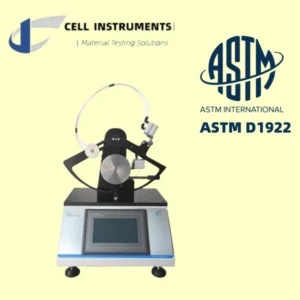
Understanding the ASTM D1922 tear strength test method is essential for evaluating the mechanical durability of flexible packaging materials. By leveraging Elmendorf tear strength
measurement principles and accurate instrumentation like the SLD-01 tearing strength tester, companies can improve product safety, reduce failures, and enhance customer satisfaction.
Professionals in quality control, material R&D, and regulatory compliance will find ASTM D1922 a critical tool for material performance verification.
 RO
RO  EN
EN  AR
AR  BG
BG  CS
CS  DA
DA  DE
DE  EL
EL  ES
ES  ET
ET  FI
FI  FR
FR  HU
HU  ID
ID  IT
IT  JA
JA  KO
KO  LT
LT  LV
LV  NB
NB  NL
NL  PL
PL  PT
PT  RU
RU  SK
SK  SL
SL  SV
SV  TR
TR  UK
UK