
Elmendorf Tear Test: A Reliable Method to Evaluate Tear Strength in Flexible Materials

Teste de rasgamento Elmendorf

O Elmendorf tear test is a widely adopted method for evaluating the tear strength of plastic films, paper, and other thin sheeting materials. It plays a critical role in assessing the durability and mechanical resistance of flexible materials used in packaging, medical, textiles, and industrial applications. This test, standardized under Norma ASTM D1922, provides valuable data for material selection, quality assurance, and product design.

Introdução

Tear strength measures a material’s ability to resist the propagation of a tear once it has started. This property is especially crucial in packaging applications where integrity under stress—such as during transportation or handling—is vital. A weak material may tear easily, compromising both the functionality and safety of the product it protects.

O Norma ASTM D1922 standard outlines the procedure for determining tear resistance using a pendulum-style tear tester—commonly referred to as the Elmendorf method. It is designed to simulate real-world tear conditions by measuring the force required to continue tearing a precut slit in a material sample. The result reflects the energy absorbed during tear propagation, which directly correlates with material strength.

Key Features :

  • Test Type: Propagation tear resistance using a pendulum method

  • Units: Measured in millinewtons (mN) or grams-force

  • Specimens: Films or sheeting ≤ 0.25 mm thick, with a pre-slit of 20 mm

  • Direction: Both machine and transverse directions are tested for anisotropic materials

  • Aplicativo: Primarily used for plastic films, paper, textiles, and laminated packaging

How the Elmendorf Tear Test Works

The test involves clamping a pre-slit specimen between two jaws—one fixed, the other attached to a swinging pendulum. Once released, the pendulum tears through the remaining material, and the energy expended is measured. The resulting force gives insight into the  strength of tearing and consistency of the material across samples.

Step-by-Step Process:

  1. Preparação de Amostras – Cut standardized samples using a die, and pre-slit them to 20 mm depth.

  2. Conditioning – Maintain standard temperature and humidity before testing.

  3. Montagem – Clamp the specimen into the test apparatus.

  4. Execução de testes – Release the pendulum and allow it to tear through the sample.

  5. Result Recording – The energy required is displayed and recorded automatically by the system.

Equipment

For accurate and consistent results, a reliable  tester is essential. The Instrumentos de Célula SLD-01 is a high-performance option engineered for Elmendorf tear testing in accordance with ASTM standard.
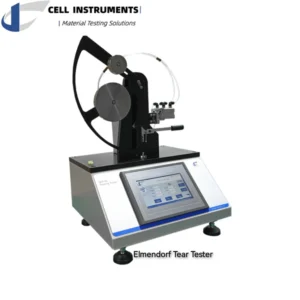
elmendorf tear test

  • Compliant with ASTM D1922 and ISO 6383-2

  • PLC control and HMI touchscreen for intuitive operation

  • Automatic pendulum release and pneumatic clamping for repeatable results

  • Data auto-statistics with real-time reporting and optional microprinter

  • Broad test range suitable for paper, film, foil, and nonwoven materials

This tear tester is particularly beneficial for quality control professionals in packaging, printing, film production, and material research labs.

Aplicações

O Elmendorf method is indispensable in evaluating the suitability of materials in sectors where tear resistance impacts performance and safety:

  • Flexible Packaging – Ensures plastic films won’t rupture during transportation or sealing

  • Medical and Pharmaceuticals – Validates film strength in blister packs, pouches, and wraps

  • Textile and Nonwoven Industries – Measures durability of fabrics and hygiene products

  • Paper and Printing – Determines resistance of coated and laminated paper to tearing

 Accurate Testing Tips

To maintain accuracy and reproducibility in yourtest, consider the following:

  • Use specimens of consistent thickness and free from defects

  • Ensure pendulum bearings are clean and friction-free

  • Perform regular calibration using certified check weights

  • Follow ASTM guidelines for environmental conditioning

  • Test samples in both machine and transverse directions for anisotropic materials

Conclusão

O Elmendorf tear test offers a simple yet powerful way to quantify the tear strength of thin materials under dynamic stress. By adhering to Norma ASTM D1922, manufacturers and researchers can evaluate material performance with confidence.

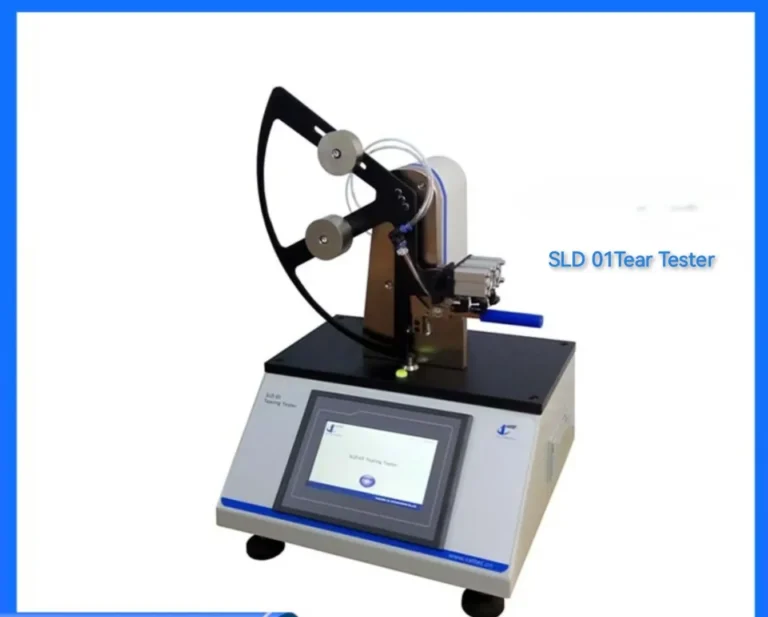
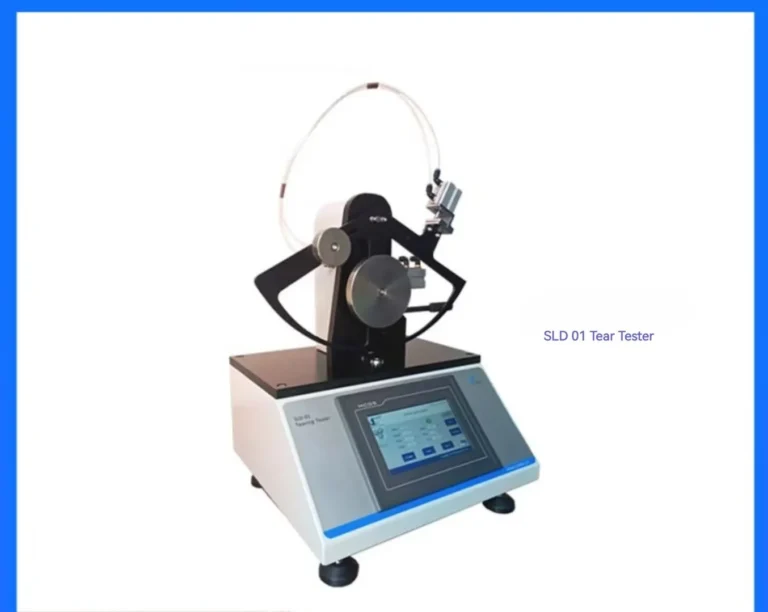
For those seeking reliable and compliant equipment, the Testador de rasgo SLD-01 de Instrumentos de Célula delivers precise, repeatable results that support R&D, production, and quality assurance needs.
Teste de rasgamento Elmendorf

Teste de rasgamento Elmendorf

In packaging, printing, and flexible materials industries, the Elmendorf tear test plays a critical role in evaluating the durability and performance of thin film materials. This standardized method provides an objective measure of a material’s resistance to the propagation of an existing tear, offering insight into its real-world usability and mechanical robustness.

Em Instrumentos de Célula, we help customers apply the Elmendorf tear method with precision using our advanced Testador de rasgo SLD-01, designed to meet modern industry demands while maintaining strict alignment with international testing standards.

Tear Resistance Test, ASTM D1922, and Tear Strength of Film

A high-quality tear resistance test must provide accurate and repeatable data. The Norma ASTM D1922 standard outlines a well-defined method to measure the tear strength of film using the Elmendorf apparatus. This standard is widely accepted in testing laboratories, film production, and packaging quality assurance.

The Elmendorf method involves:

  • Pre-cutting a slit in the test specimen to create a starting tear.

  • Releasing a pendulum arm to apply a consistent tearing force.

  • Measuring the energy loss as the pendulum tears through the sample.

By capturing this energy, the system calculates tear resistance, usually expressed in mN (millinewtons) ou gf (gram-force) depending on the industry requirement. For materials like polyethylene (PE), polypropylene (PP), PET, or composite films, this method remains a gold standard due to its simplicity, repeatability, and accuracy.

Why Tear Strength Matters in Film Testing

The tear strength of a film determines its resistance to failure during use. Whether it’s a food pouch, medical blister pack, or shrink wrap, weak tear resistance can lead to:

  • Product leakage

  • Damage during transport

  • Unreliable shelf life

A reliable tear strength value:

  • Prevents failures during production, handling, and end-use

  • Guides material selection for cost optimization and performance

  • Supports quality control in regulated industries like pharmaceuticals and food packaging


By using ASTM D1922, manufacturers can compare materials, validate production batches, and improve film formulations for both functionality and efficiency.

Key Advantages of Cell Instruments SLD-01 Tear Tester

For precision Elmendorf tear test applications, the SLD-01 Tear Tester by Cell Instruments integrates advanced control systems with user-friendly features

For precision Elmendorf tear test applications, the Testador de rasgo SLD-01 by Cell Instruments integrates advanced control systems with user-friendly features:

  • PLC Control & Touchscreen Interface: Ensures test consistency and allows easy parameter adjustments.

  • Fixação pneumática: Maintains uniform grip pressure, eliminating inconsistencies from manual handling.

  • Auto Pendulum Release: Reduces operator bias and improves repeatability.

  • Calibration Weights: Internal verification across various pendulum capacities (200 to 6400 gf).

  • Onboard Micro-printer & RS-232 Port: Allows real-time result output and digital data transfer.

  • Multiple Unit Outputs: Supports both gf and mN tear strength values, along with optional tear index for pulp & paper industries.

  • Optional Advanced Software: For statistical analysis, data storage, and reporting.

This combination makes the SLD-01 ideal for laboratories, R&D departments, e production quality control, where precision and traceability are essential.

Aplicações em vários sectores

The Elmendorf tear test is used in various sectors, including:

  • Flexible Packaging: To ensure packaging films won’t fail during sealing, filling, or transport.

  • Textile and Nonwoven Materials: For quality control in garment or industrial fabric manufacturing.

  • Paperboard and Laminates: To assess tear propagation in layered substrates.

  • Medical and Pharma Films: To meet regulatory and safety requirements for sterile barrier systems.

Each of these applications benefits from accurate tear resistance measurement, helping manufacturers balance performance and cost without compromising on quality.

Conclusion: Invest in Reliable Tear Testing to Ensure Film Performance

With material performance becoming a critical factor in packaging innovation and safety, the Elmendorf tear test remains a trusted method for determining tear strength. By adhering to Norma ASTM D1922, manufacturers and labs can ensure that their materials meet industry standards, reduce waste, and improve product reliability.

Instrumentos de Célula’ SLD-01 Tear Tester offers a precise, reliable, and efficient way to carry out these tests, helping customers stay competitive while maintaining strict quality standards.

Carrinho de compras
pt_PTPT

Precisando de um método de teste ou orçamento.

Deixe-nos uma mensagem e responderemos o mais breve possível!