
Trouser Tear Resistance Test for Plastic Films
Norma ASTM D1938
O Teste de resistência ao rasgamento de calças is an essential method for evaluating the tear propagation resistance of plastic films and thin sheeting. Governed by Norma ASTM D1938, this standard test provides crucial data for industries that rely on the durability and performance of their plastic films, such as packaging, medical devices, and textiles. In this article, we will explore the ASTM D1938 test method, the importance of resistência ao rasgo, and how the test can be applied in various industries.
ASTM D1938: Standard Test Method for Tear Propagation Resistance
Norma ASTM D1938 is the standard test method for determining the resistência à propagação de rasgos de filmes de plástico and thin sheeting. The test involves a single-tear method, where a slit is made in a specimen, and the force required to propagate the tear is measured. The constant-rate-of-grip separation machine used in this method ensures the test is precise, providing manufacturers with valuable data on how their films will behave under stress.
What Is Tear Propagation Resistance?
Resistência à propagação do rasgo refers to the ability of a material to resist the spread of a tear once it has started. The Teste de resistência ao rasgamento de calças is an effective way to measure this property in filmes de plástico e chapas finas. The test measures how easily the tear continues across the material when force is applied. A material with higher resistência ao rasgo will resist the tear from spreading, which is vital for materials used in packaging and safety applications.
The Test Procedure: Trouser Tear Method
O Ensaio de resistência ao rasgo das calças follows a structured procedure to assess resistência ao rasgo:
-
Preparação de Amostras: A rectangular specimen of the material is cut, with a slit made in the center. The specimen must meet specific dimensions as outlined in Norma ASTM D1938.
-
Grip Separation: The specimen is held between two grips in a constant-rate-of-grip separation machine, with an initial separation of 50 mm (2 inches).
-
Aplicação de força: The machine applies a force at a controlled separation speed (250 mm/min), causing the tear to propagate across the specimen.
-
Coleta de dados: The force required to propagate the tear is recorded, and this data is used to calculate the resistência à propagação de rasgos of the material.
-
Test Direction: The test is performed in both the machine direction and the transverse direction of the material, ensuring the results reflect the material’s behavior in different orientations.
Significance of Tear Propagation Resistance Testing
Tear resistance is a critical property for filmes de plástico e chapas finas used in various industries. For example:
-
Indústria de embalagens: Films used in packaging need to resist tearing during transportation and handling. The Teste de resistência ao rasgamento de calças ensures that packaging materials are durable and reliable.
-
Dispositivos médicos: Tear resistance is essential in ensuring the safety and integrity of materials used in medical packaging, where a tear could compromise sterility.
-
Têxteis: Fabrics used for protective clothing and safety gear require high resistência ao rasgo to perform effectively in real-world conditions.
O Norma ASTM D1938 test provides valuable data to manufacturers, enabling them to select materials with the right resistência à propagação de rasgos for their specific applications.
Applications of ASTM D1938 in Industry
O Teste de resistência ao rasgamento de calças is applied in several industries to ensure the durability and reliability of filmes de plástico e chapas finas:
-
Embalagem: Ensures that films used in packaging can withstand mechanical stresses without tearing.
-
Safety Products: Used to test materials in safety equipment, such as protective clothing and industrial tarps, ensuring they resist tearing in critical applications.
-
Medical Industry: Ensures that medical packaging materials are durable and can maintain product integrity during storage and transportation.
Testing Plastic Films and Thin Sheeting with ASTM D1938
Norma ASTM D1938 provides a standardized method to evaluate the resistência à propagação de rasgos de filmes de plástico and thin sheeting. It is essential to follow the test specifications closely to ensure accurate and reproducible results. Test specimens should be conditioned according to ASTM D618, and the testing environment should maintain specific temperature and humidity conditions for reliable outcomes.
The results from the Teste de resistência ao rasgamento de calças help manufacturers evaluate how their products will perform under real-world conditions, ensuring they meet industry standards and customer expectations.
Cell Instruments: Advanced Testing Solutions for Tear Resistance
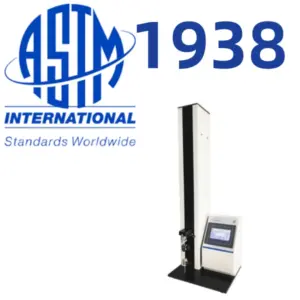
Em Instrumentos de Célula, we provide state-of-the-art máquinas de ensaio de tração e tear resistance testers that comply with Norma ASTM D1938. O nosso constant-rate-of-grip separation machines deliver precise measurements of resistência à propagação de rasgos, allowing manufacturers to test and verify the resistência ao rasgamento de filmes de plástico e chapas finas. Whether you’re working in packaging, medical devices, or textiles, our equipment ensures you meet the highest quality standards.
Conclusão
O Teste de resistência ao rasgamento de calças as defined by Norma ASTM D1938 is an essential tool for evaluating the tear-propagation resistance de filmes de plástico e chapas finas. By following this standardized test method, manufacturers can ensure that their products meet the necessary durability standards, especially in applications where material performance is critical. Instrumentos de Célula offers reliable testing solutions that help ensure your materials meet industry requirements, providing accurate data for optimal product development and quality assurance.
Perguntas frequentes
Q1: What is the purpose of the Trouser Tear Resistance Test?
A1: O Teste de resistência ao rasgamento de calças is used to measure the tear-propagation resistance de filmes de plástico and thin sheeting. By determining the force required to propagate a tear from a pre-cut slit, this test helps assess the material’s durability and ability to withstand mechanical stresses, which is essential for materials used in packaging, textiles, and safety applications.
Q2: How is the ASTM D1938 test method different from other tear resistance tests?
A2: Norma ASTM D1938 specifically uses the single-tear method with a constant-rate-of-grip separation machine para medir resistência à propagação de rasgos. It is particularly useful for testing thin films and sheeting with a thickness of 1 mm or less. Unlike other methods, it measures the force required to continue a tear across the material, making it ideal for plastic films used in embalagem e médico industries.
Q3: What are the key factors that affect the results of the Trouser Tear Resistance Test?
A3: The results of the Teste de resistência ao rasgamento de calças can be affected by several factors, including the thickness of the material, its extensibility, and the orientation of the specimen (machine direction vs. transverse direction). Variations in material composition, such as whether the film is treated, revestido, ou sized, can also impact tear resistance. Proper conditioning e specimen preparation are essential to obtaining reliable results.
Q4: In which industries is ASTM D1938 tear resistance testing used?
A4: Norma ASTM D1938 is widely used in industries where the tear-propagation resistance de filmes de plástico and thin sheeting is critical. This includes the embalagem industry, where films need to withstand handling and transportation without tearing. It is also used in the médico industry for sterile packaging, in têxteis for protective clothing, and in the safety industry for materials that must resist tearing under stress.
Q5: How does ASTM D1938 impact product quality in the packaging industry?
A5: By using Norma ASTM D1938 to test the resistência ao rasgo of packaging materials, manufacturers can ensure that their products will perform well in real-world conditions. For example, filmes de plástico used for embalagem de alimentos ou embalagem de dispositivos médicos must be able to withstand handling, transportation, and environmental factors without tearing. The Teste de resistência ao rasgamento de calças helps identify materials that will provide durability and safety for end-users.
Q6: How can Cell Instruments help with ASTM D1938 testing?
A6: Instrumentos de Célula offers advanced máquinas de ensaio de tração e tear resistance testers that comply with Norma ASTM D1938. O nosso constant-rate-of-grip separation machines are designed to provide precise measurements of tear-propagation resistance, helping manufacturers assess the resistência ao rasgamento de filmes de plástico e chapas finas. Our reliable testing solutions ensure that your materials meet industry standards and perform as expected in their applications.
 PT
PT  EN
EN  AR
AR  BG
BG  CS
CS  DA
DA  DE
DE  EL
EL  ES
ES  ET
ET  FI
FI  FR
FR  HU
HU  ID
ID  IT
IT  JA
JA  KO
KO  LT
LT  LV
LV  NB
NB  NL
NL  PL
PL  RO
RO  RU
RU  SK
SK  SL
SL  SV
SV  TR
TR  UK
UK  HE
HE  TH
TH  VI
VI