
Geomembrane Peel and Shear Testing Method
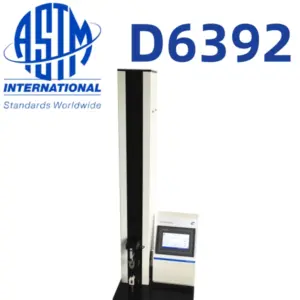
ASTM D6392
Wprowadzenie
The Geomembrane peel and shear testing method is crucial for ensuring the integrity of seams in geomembranes, which are widely used as barriers in environmental applications such as landfill liners and water containment systems. The ASTM D6392 standard provides a systematic procedure for assessing the quality and durability of these seams, especially those produced using thermo-fusion methods.
In this article, we will explore the peel and shear testing methods outlined in ASTM D6392, focusing on the procedures, materials tested, and the importance of these tests in maintaining the structural integrity of geomembranes.
ASTM D6392: The Core Standard for Geomembrane Seam Integrity
ASTM D6392 is the definitive standard for testing the integrity of geomembrane seams produced by thermo-fusion methods. The test evaluates the shear strength oraz peel strength of seams in nonreinforced geomembranes, which are commonly used in a variety of industrial applications.
This standard covers three primary methods for creating seams in geomembranes:
- Hot Air Seaming – High-temperature air is used to melt the geomembrane surfaces together.
- Hot Wedge Seaming – A hot metal wedge melts the surfaces to bond them.
- Extrusion Seaming – Molten resin is extruded between two geomembrane sheets to form a continuous bond.
The test methods described in ASTM D6392 assess the shear oraz peel strength of these seams to ensure their durability under stress.
Peel Testing: Assessing Bond Strength in Geomembrane Seams
Peel testing is a destructive test that determines how well the geomembrane seams bond to each other. During the peel test, a specimen is subjected to a 90° angle peel, which simulates the separation force that could occur under real-world conditions.
For this test, five specimens are cut from the geomembrane sample, ensuring they are properly conditioned at standard conditions (21 ± 2°C and 50-70% relative humidity). The test measures how much force is required to peel the two geomembrane layers apart, which directly reflects the quality of the seam.
ASTM D6392 specifies the test speed and the necessary equipment, ensuring that consistent results are achieved for different materials such as HDPE, LLDPEoraz PVC.
Shear Testing: Measuring Resistance to Force in Geomembrane Seams
The shear test is used to measure the seam’s ability to resist separation when subjected to lateral stress. This test is particularly important for geomembranes used in applications where they will experience shearing forces. During the shear test, the specimen is pulled apart at a constant crosshead speed, and the elongation and force required to propagate the tear are recorded.
The shear strength test ensures that the seams can withstand forces acting parallel to the seam, which is often the type of stress experienced in landfill or water containment systems. The shear test is performed under the same environmental conditions as the peel test, and shear strength is measured in relation to the elongation of the material.
ASTM D6392 provides the procedure for both high-density polyethylene (HDPE) oraz low-density materials like PVC oraz LLDPE, with specific test speeds for different geomembrane materials.
Why Geomembrane Seam Integrity is Critical for Environmental Protection
The integrity of geomembrane seams plays a pivotal role in preventing the migration of liquids or gases across the barrier. Inaccurate or weak seams can lead to failures, compromising the effectiveness of geomembranes in applications such as:
- Landfill liners
- Pond and reservoir liners
- Mining and waste containment
- Aquatic and environmental barriers
By using the geomembrane peel and shear testing method, manufacturers can ensure that their products meet the required standards for quality and durability. It also provides data that can be used to address issues early in the construction phase, reducing the risk of seam failure in service.
The Importance of ASTM D6392 for Quality Assurance
For manufacturers and quality control engineers, ASTM D6392 offers a reliable method to evaluate the performance of geomembrane seams. It ensures that seams created using thermo-fusion methods meet the necessary strength and durability requirements, ultimately preventing failures that could result in costly repairs and environmental damage.
The test results from peel and shear testing provide critical data that helps engineers make informed decisions about the suitability of materials for specific applications, guaranteeing the long-term effectiveness of geomembranes in their roles as barriers.
Conclusion
In conclusion, the geomembrane peel and shear testing method outlined in ASTM D6392 is vital for ensuring the integrity of seams in nonreinforced geomembranes. By assessing peel strength oraz shear resistance, this test helps manufacturers and quality control professionals ensure that geomembranes are capable of withstanding environmental stresses, ensuring their long-term effectiveness in containment and protection applications.
For accurate and reliable testing of geomembrane seams, using the appropriate tensile tester and adhering to ASTM D6392 is essential. Cell Instruments provides high-quality testing equipment that meets these standards, offering tools for precise testing of fabric and geomembrane materials.
FAQ
Q1: What is the purpose of the Geomembrane Peel and Shear Testing Method in ASTM D6392?
A1: The purpose of the Geomembrane Peel and Shear Testing Method in ASTM D6392 is to determine the integrity of geomembrane seams produced by thermo-fusion methods. This test ensures the quality and durability of nonreinforced geomembrane seams, evaluating their peel strength oraz shear resistance. By conducting these tests, manufacturers can ensure that the geomembrane seams will perform effectively in their intended applications, such as in landfill liners or water containment systems.
Q2: What are the two primary test methods involved in ASTM D6392?
A2: The two primary test methods involved in ASTM D6392 are the peel test and the shear test.
- Peel Test: Measures the force required to peel apart two geomembrane surfaces bonded by a seam.
-
Shear Test: Measures the resistance of the seam to lateral forces, ensuring the geomembrane can withstand shear stress without failure.
Both tests are crucial for evaluating the seam integrity and performance of geomembranes in real-world conditions.
Q3: What materials are covered by ASTM D6392 for geomembrane testing?
A3: ASTM D6392 applies to nonreinforced geomembranes made from materials such as:
- Very low-density polyethylene (VLDPE)
- Linear low-density polyethylene (LLDPE)
- High-density polyethylene (HDPE)
- Polyvinyl chloride (PVC)
- Flexible polypropylene (fPP)
- Linear medium-density polyethylene (LMDPE)
- Very flexible polyethylene (VFPE)
These materials are commonly tested for their seam integrity using peel and shear tests as outlined in the standard.
Q4: What is the significance of shear strength testing for geomembranes?
A4: Shear strength testing for geomembranes is significant because it evaluates how well the geomembrane seams can withstand lateral forces, which are commonly encountered in applications like landfill liners, pond liners, or water containment systems. By measuring the shear resistance, engineers can assess whether the geomembrane can maintain its barrier function and prevent failures in service. This ensures the longevity and reliability of the geomembrane in challenging environmental conditions.
Q5: How are peel tests conducted according to ASTM D6392?
A5: The peel test according to ASTM D6392 is conducted by subjecting the geomembrane specimen to a 90° peel. The specimen is gripped on both sides of the seam, and a constant crosshead speed is applied to peel apart the two bonded geomembrane surfaces. The force required for peeling is recorded, and the test continues until the specimen ruptures. This test helps determine the peel strength of the seam and assesses its ability to resist separation.
Q6: Why is the geomembrane shear test important in evaluating seam integrity?
A6: The geomembrane shear test is important because it measures the resistance of the geomembrane seam to forces applied parallel to the bond. This is critical because geomembranes often experience lateral stresses in their applications, such as in containment systems. A seam that performs well under shear forces will provide a stronger barrier against leakage and failure. The shear strength test is essential for assessing how well the seam holds up under stress, ensuring the geomembrane remains intact and functional over time.
Q7: What are the main materials tested using ASTM D6392 and what are their typical applications?
A7: The primary materials tested using ASTM D6392 include HDPE, LLDPE, PVC, fPPoraz VLDPE. These materials are typically used in the construction of geomembranes for applications such as:
- Landfill liners to prevent leachate migration
- Pond and reservoir liners for water containment
- Mining and waste containment systems
- Aquatic barrier applications to protect natural bodies of water
Testing the seam integrity of these materials ensures that geomembranes will function as effective barriers in various environmental and industrial applications.
Q8: How does ASTM D6392 ensure the consistency of test results?
A8: ASTM D6392 ensures the consistency of test results by specifying the exact testing conditions, specimen preparation methods, and equipment standards, such as the required tensile instrumentation and grip faces. The standard also defines the conditioning conditions, such as temperature and humidity, to ensure accurate results. By adhering to these strict guidelines, the test provides reliable and reproducible data for evaluating geomembrane seam integrity, helping manufacturers and quality control teams ensure that their products meet the necessary performance standards.
 PL
PL  EN
EN  AR
AR  BG
BG  CS
CS  DA
DA  DE
DE  EL
EL  ES
ES  ET
ET  FI
FI  FR
FR  HU
HU  ID
ID  IT
IT  JA
JA  KO
KO  LT
LT  LV
LV  NB
NB  NL
NL  PT
PT  RO
RO  RU
RU  SK
SK  SL
SL  SV
SV  TR
TR  UK
UK