
Packaging quality directly impacts product safety and consumer trust, especially in sensitive fields like pharmaceuticals. The package compression test is a fundamental method to evaluate how well packaging materials withstand pressure and external forces during storage and transportation. This article explores the key aspects of package compression testing, with emphasis on Tapppi T804 standard, pharmaceutical composite film bag packaging, en infusion bag packaging compression test. It also guides professionals on performing these tests effectively and introduces Cell Instruments’ advanced solutions for precise measurements.
Understanding Package Compression Test
A package compression test evaluates the mechanical strength of packaging materials under compressive loads. This test simulates real-world conditions where packages endure stacking pressures, transport vibrations, or accidental impacts. By measuring the compression resistance, quality control teams can determine the packaging’s capacity to protect its contents.
In pharmaceutical applications, packaging like composite film bags en infusion bags must pass stringent performance requirements to ensure drug safety and sterility. Failure to meet compression resistance can result in leaks, contamination, or compromised efficacy.
Applying Tapppi T804 in Package Compression Testing
De Tapppi T804 standard provides a comprehensive framework for testing compression strength, mainly for paper-based packaging but adaptable to composite films as well. It specifies the test setup, loading rates, and data interpretation methods to guarantee reliable, repeatable results.
Utilizing Tapppi T804 guidelines in testing pharmaceutical composite film bag packaging ensures compliance with industry benchmarks and regulatory expectations. The same applies to infusion bag packaging compression test, where evaluating compression resistance is vital to prevent failures during clinical use.
Testing Pharmaceutical Composite Film Bags and Infusion Bags
Pharmaceutical composite film bags combine multiple material layers to achieve flexibility, barrier properties, and durability. Infusion bags, used for intravenous therapies, require exceptional compression strength to avoid rupture and maintain sterility.
In a typical package compression test, samples are securely placed between pressure plates. The upper plate moves downward, applying a controlled compressive force while sensors monitor the resistance in real time. This method replicates the stresses that packaging faces during stacking and handling.
Advanced Testing Solutions:
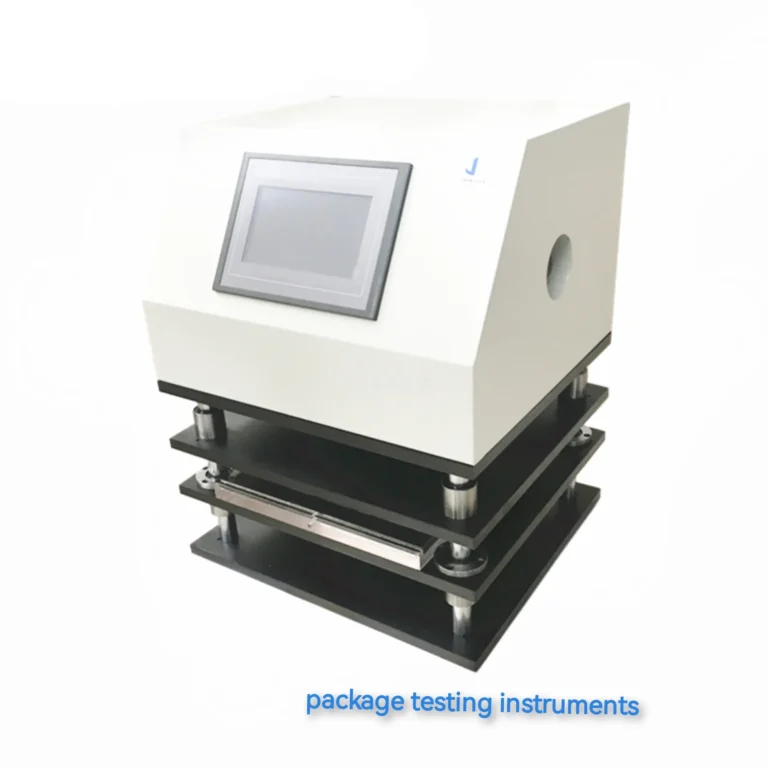
To achieve precise and reliable results, the Cel Instrumenten PCT-01 Package Compression Tester is an excellent choice. Designed for diverse packaging materials including composite films and infusion bags, this tester offers high accuracy with its dual pressure plate system and real-time force measurement.
The PCT-01 package compression tester supports compliance with Tapppi T804 and other relevant standards, making it suitable for pharmaceutical, food, and cosmetic industries. Its adaptability and ease of operation help quality control teams optimize packaging designs and guarantee product safety.
The tester offers adjustable test speeds, automatic pressure compensation, and a liquid collection tray to safely capture contents in the event of a rupture. Its HMI touch screen en PLC-based control system ensure intuitive operation and accurate results.
In industries where safety is non-negotiable, especially in intravenous therapy and sterile drug delivery, failure to meet pressure resistance standards can lead to severe regulatory, reputational, and health consequences.
Best Practices for Conducting Package Compression Tests
Sample Preparation: Ensure samples reflect actual production conditions and are conditioned per relevant standards.
Standard Compliance: Follow Tapppi T804 or equivalent protocols strictly to ensure valid results.
Equipment Calibration: Regularly calibrate testing instruments like the PCT-01 for consistent accuracy.
Data Analysis: Evaluate compression curves and peak force values to assess packaging performance.
Reporting: Document test conditions and outcomes clearly for quality assurance and regulatory submissions.
Conclusion
De package compression test plays a crucial role in verifying the mechanical strength of pharmaceutical composite film bags and infusion packaging. Adhering to Tapppi T804 standards and employing advanced testers like the Cell Instruments PCT-01 package compression tester ensures accurate, reliable assessments.
By integrating these testing practices, manufacturers and quality control professionals can enhance packaging durability, protect product integrity, and meet rigorous industry requirements. For those seeking expert solutions, Cell Instruments offers tailored services and instruments to elevate your packaging testing capabilities.
 NL
NL  EN
EN  AR
AR  BG
BG  CS
CS  DA
DA  DE
DE  EL
EL  ES
ES  ET
ET  FI
FI  FR
FR  HU
HU  ID
ID  IT
IT  JA
JA  KO
KO  LT
LT  LV
LV  NB
NB  PL
PL  PT
PT  RO
RO  RU
RU  SK
SK  SL
SL  SV
SV  TR
TR  UK
UK