
ASTM D6392
Test op de integriteit van naden in geomembranen
ASTM D6392 is een cruciale norm voor het testen van de integriteit van niet-versterkte naden in geomembranen die met thermofusiemethoden zijn vervaardigd. De test is van essentieel belang om de prestaties en betrouwbaarheid te waarborgen van geomembraannaden die in diverse geotechnische en milieutoepassingen worden gebruikt. In dit artikel worden de belangrijkste aspecten van de ASTM D6392 test, waarbij de nadruk ligt op de de integriteit van de naden van het geomembraan testen, afschuif- en afpeltesten, en het belang daarvan voor de kwaliteitscontrole.
Test op de integriteit van naden in geomembranen: het waarborgen van de kwaliteit van de naden
De de integriteit van de naden van het geomembraan test, zoals gespecificeerd in ASTM D6392, is bedoeld om de prestaties van naden te beoordelen in niet-gewapende geomembranen. Deze geomembranen worden vaak gebruikt in toepassingen waar een ondoordringbare barrière nodig is, zoals bekledingen voor stortplaatsen, vijverbekledingen en mijnbouwtoepassingen. De test beoordeelt hoe goed de naden van het geomembraan, vervaardigd met behulp van thermofusie methoden, kunnen spanning weerstaan zonder te bezwijken.
Tot de thermofusiemethoden voor het maken van deze naden behoren:
-
Hete lucht: Er wordt hete lucht gebruikt om de oppervlakken van het geomembraan te smelten, waarna deze tegen elkaar worden geperst om een verbinding te vormen.
-
Hete wig (of mes): Een hete metalen wig smelt de oppervlakken, waarna druk wordt uitgeoefend om een naadloze verbinding tot stand te brengen.
-
Extrusie: Gesmolten hars wordt tussen de oppervlakken van het geomembraan geëxtrudeerd om een naad te vormen.
Elk van deze methoden wordt getest met behulp van afschuiving en tests op afpelsterkte, waarbij ervoor wordt gezorgd dat de naden aan de vereiste sterkte-eisen voldoen.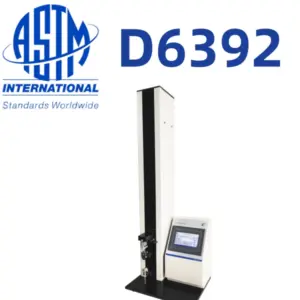
ASTM D6392 Testmethode: afschuif- en afpeltests
De ASTM D6392 de methode omvat zowel afschuifproef en testen van de afpelsterkte om de sterkte van de naden te beoordelen. Deze tests worden onder gecontroleerde omstandigheden uitgevoerd om na te gaan in hoeverre het materiaal bestand is tegen breuk onder invloed van een uitgeoefende kracht.
Afschuifproef
In afschuifproef, wordt de kracht gemeten die nodig is om de naad van het geomembraan te scheuren door een kracht uit te oefenen die evenwijdig loopt aan de hechtlijn. De test meet de rek van het geomembraan en zijn weerstand tegen schuifkrachten. De procedure voor de afschuifproef luidt als volgt:
-
De proefstukken worden vastgezet in klemmen met een minimale breedte van 25 mm (1 inch).
-
De test wordt uitgevoerd bij een constante snelheid van de machinekruiskop, doorgaans 50 mm/min voor HDPE en 500 mm/min voor materialen zoals LLDPE en PVC.
-
De test wordt voortgezet totdat het proefstuk 50%-rek of scheuren, afhankelijk van het materiaal.
Deze test is van cruciaal belang om vast te stellen of het geomembraan bestand is tegen de belastingen waarmee het in de praktijk te maken kan krijgen.
Afpeltest
Afpeltest Hierbij wordt de naad onder een hoek van 90 graden uit elkaar getrokken. Deze test is met name nuttig voor het beoordelen van de hechtingssterkte van de naad. De procedure omvat:
-
Het monster vastzetten en een dwarskop-snelheid van 50 mm/min voor HDPE en 500 mm/min voor flexibelere materialen.
-
Het in de gaten houden van de scheiding terwijl het monster wordt losgetrokken.
Afpeltests zijn van cruciaal belang om te garanderen dat de hechting intact blijft tijdens normaal gebruik en in de praktijk.
Betekenis en toepassing van ASTM D6392
De ASTM D6392 de testmethode is van onschatbare waarde voor kwaliteitsborging en kwaliteitscontrole bij de productie van geomembranen. De integriteit van de naden is van directe invloed op de prestaties op lange termijn van geomembraanmaterialen, die van essentieel belang zijn voor het voorkomen van vloeistofmigratie in diverse toepassingen. Door gebruik te maken van afschuiving en afpeltest Met behulp van deze methoden kunnen fabrikanten de kwaliteit van de naden beoordelen en ervoor zorgen dat het geomembraan bestand is tegen omgevings- en gebruiksbelasting.
Belangrijkste voordelen:
-
Kwaliteitscontrole: ASTM D6392 waarborgt dat naden in geomembranen voldoen aan de vereiste prestatienormen, waardoor defecten in de praktijk worden voorkomen.
-
Betrouwbaarheid: Regelmatige controles dragen bij aan het waarborgen van de duurzaamheid van de naden van geomembranen, waardoor het risico op lekken en defecten bij kritieke toepassingen wordt verminderd.
-
Naleving: Door zich te houden aan ASTM D6392 kunnen fabrikanten voldoen aan de industrienormen, waardoor wordt gewaarborgd dat materialen voldoen aan de vereiste specificaties voor diverse milieu- en geotechnische toepassingen.
Conclusie
De ASTM D6392 Een testmethode is een essentiële procedure voor het beoordelen van de de integriteit van de naden van het geomembraan, met name die welke via thermofusiemethoden worden vervaardigd. Met behulp van afschuiving en tests op afpelsterkte, deze norm levert waardevolle gegevens op om ervoor te zorgen dat de naden in niet-gewapende geomembranen voldoen aan de strenge eisen van praktijktoepassingen. Voor fabrikanten draagt het naleven van deze norm bij aan het handhaven van kwaliteitsborging en de betrouwbaarheid van hun producten op de lange termijn te verbeteren.
Op Cel Instrumenten, bieden wij geavanceerde testapparatuur aan die is ontworpen om te voldoen aan de ASTM D6392-normen. Onze trektest machines zijn ideaal voor het uitvoeren van afschuiving en afpeltests, waardoor nauwkeurige en betrouwbare resultaten bij de beoordeling van de naadintegriteit worden gegarandeerd.
FAQ
V1: Waarvoor wordt de testmethode ASTM D6392 gebruikt?
A1: De ASTM D6392 Deze testmethode wordt gebruikt om de integriteit van naden in niet-gewapende geomembranen te bepalen. Deze test is van cruciaal belang voor de kwaliteitscontrole en -borging bij de productie van geomembranen die worden gebruikt in diverse toepassingen, zoals stortplaatsbekledingen, vijverbekledingen en mijnbouwlocaties. De test beoordeelt naden die zijn vervaardigd door middel van thermofusiemethoden met behulp van afschuiving en afpeltests om ervoor te zorgen dat het geomembraan onder belasting bestand is tegen bezwijken.
Vraag 2: Welke soorten geomembraanmaterialen worden getest volgens ASTM D6392?
A2: ASTM D6392 wordt gebruikt voor het testen van niet-gewapende geomembranen van diverse materialen, waaronder:
- Polyethyleen met zeer lage dichtheid (VLDPE)
- Lineair polyethyleen met lage dichtheid (LLDPE)
- Zeer flexibel polyethyleen (VFPE)
- Lineair polyethyleen met gemiddelde dichtheid (LMDPE)
- Hogedichtheidpolyethyleen (HDPE)
- Polyvinylchloride (PVC)
- Flexibel polypropyleen (fPP)
Deze materialen worden vaak gebruikt vanwege hun ondoordringbaarheid en flexibiliteit in geotechnische en milieutoepassingen.
Vraag 3: Wat zijn de twee belangrijkste testmethoden die in ASTM D6392 worden gebruikt?
A3: De ASTM D6392 De testmethode omvat twee hoofdtests om de integriteit van de naden van het geomembraan te beoordelen:
- Afschuifproef: Meet de kracht die nodig is om de naad te scheiden door een belasting uit te oefenen parallel aan de hechtlijn. Deze test beoordeelt het vermogen van de naad om afschuifkrachten en rek te weerstaan.
- Afpeltest: Hierbij wordt de naad onder een hoek van 90 graden uit elkaar getrokken om de hechtsterkte te meten. Deze test beoordeelt het vermogen van de naad van het geomembraan om onder belasting niet uit elkaar te gaan.
Deze tests worden uitgevoerd om praktijkomstandigheden na te bootsen en de prestaties van het geomembraan te beoordelen.
Vraag 4: Hoe dragen afpeltests en afschuiftests bij aan de kwaliteitscontrole van naden in geomembranen?
A4: Beide schillen en afschuifproeven zijn van cruciaal belang om ervoor te zorgen dat de de integriteit van de naden van het geomembraan:
- Afpeltests de hechtingssterkte van de naad meten, om er zeker van te zijn dat de verbinding van het geomembraan onder trekspanning intact blijft.
-
Afschuifproeven de weerstand van de naad tegen loslaten onder schuifspanning beoordelen, wat van cruciaal belang is voor de duurzaamheid op lange termijn van geomembranen die worden blootgesteld aan omgevingsomstandigheden en mechanische belastingen.
Deze tests leveren waardevolle gegevens op voor fabrikanten, zodat zij de kwaliteit en betrouwbaarheid van hun producten kunnen waarborgen voordat deze in kritieke toepassingen worden ingezet.
V5: Hoe wordt de afschuifproef volgens ASTM D6392 uitgevoerd?
A5: In afschuifproef onder ASTM D6392, wordt de volgende procedure gevolgd:
- Het geomembraanmonster wordt in de testmachine vastgezet met behulp van klemmen met een minimale breedte van 25 mm (1 inch).
- De test wordt uitgevoerd bij een constante snelheid van de machine-kruiskop (doorgaans 50 mm/min voor HDPE en 500 mm/min (voor flexibelere materialen).
- De test wordt voortgezet totdat het proefstuk 50%-rek of scheuren, afhankelijk van het materiaal.
- De afschuiving Vervolgens wordt de kracht gemeten die nodig is om de scheur verder te laten uitbreiden, wat waardevolle gegevens oplevert over het vermogen van de naad om schuifspanningen te weerstaan.
Deze procedure is van cruciaal belang om inzicht te krijgen in hoe goed het geomembraan onder belasting in praktijkomstandigheden zal presteren.
V6: Waarom is het belangrijk om de monsters voor te bereiden voordat ze worden getest volgens ASTM D6392?
A6: Conditionering de monsters vóór het testen in ASTM D6392 is van essentieel belang om consistente en nauwkeurige resultaten te garanderen. Volgens de norm moeten de monsters worden geconditioneerd bij 21 ± 2 °C (73,4 ± 3,6 °F) en 50 ± 101 TP3T relatieve vochtigheid gedurende ten minste 40 uur vóór de test. Door de monsters te conditioneren wordt ervoor gezorgd dat ze qua temperatuur en vochtigheid in evenwicht komen, waardoor variaties in de materiaaleigenschappen worden voorkomen die de testresultaten zouden kunnen beïnvloeden.
V7: Welke apparatuur wordt gebruikt voor het uitvoeren van ASTM D6392-tests?
A7: De ASTM D6392 voor de tests is het volgende vereist trekproefmachines uitgerust met geschikte handgrepen en waarmee de snelheid van de machine-kruiskop nauwkeurig kan worden geregeld. De trekbank moet voldoen aan de vereisten zoals uiteengezet in ASTM D638 voor het nauwkeurig meten van kracht en rek. De apparatuur moet bovendien bestaan uit systemen voor gegevensverzameling voor het registreren van kracht-verplaatsingsgegevens tijdens de schillen en afschuifproeven.
Op Cel Instrumenten, wij bieden trektestapparaten en klembevestigingen die speciaal zijn ontworpen om te voldoen aan de ASTM D6392-normen, waardoor betrouwbare tests van geomembraannaden worden gegarandeerd.
 NL
NL  EN
EN  AR
AR  BG
BG  CS
CS  DA
DA  DE
DE  EL
EL  ES
ES  ET
ET  FI
FI  FR
FR  HU
HU  ID
ID  IT
IT  JA
JA  KO
KO  LT
LT  LV
LV  NB
NB  PL
PL  PT
PT  RO
RO  RU
RU  SK
SK  SL
SL  SV
SV  TR
TR  UK
UK  HE
HE  TH
TH  VI
VI