
Kantong Infus: Metode Uji Kompresi, Standar, dan Cara Memastikan Keamanan Kemasan
Kantong infus merupakan komponen penting dalam sistem layanan kesehatan modern. Baik digunakan untuk cairan infus, obat-obatan, maupun larutan nutrisi, kemasan fleksibel ini harus berfungsi dengan sempurna di bawah tekanan. Salah satu aspek terpenting dalam memastikan keamanan dan fungsionalitasnya adalah uji kompresi. Dalam panduan ini, kita akan membahas cara melakukan pengujian kantong infus, pentingnya menggunakan sebuah yang akurat alat uji kompresi kantong infus, serta bagaimana tes-tes ini sesuai dengan standar kualitas internasional.
Peran Uji Kompresi dalam Keamanan Kantong Infus
Setiap hari, kantong infus tahan terhadap tekanan selama penanganan, penumpukan, penyimpanan, dan pengangkutan. Jika sebuah kantong pecah atau bocor saat menahan beban, konsekuensinya bisa berkisar dari pemborosan produk hingga risiko serius bagi pasien. Untuk mencegah hal ini, produsen harus menguji setiap desain kemasan guna memastikan desain tersebut memenuhi baik tolok ukur kualitas internal maupun standar global seperti ISO 12048 dan ASTM D642.
Uji kompresi mensimulasikan skenario tekanan vertikal yang terjadi di dunia nyata untuk menentukan:
Kapasitas beban maksimum
Perilaku deformasi dalam keadaan tertekan
Ketahanan terhadap ledakan dan risiko kebocoran
Daya tahan selama proses penumpukan dan pengiriman
Jika dilakukan dengan benar, tes ini memberikan data penting untuk kontrol kualitas, kepatuhan terhadap peraturandan pengembangan produk.
Persyaratan Peralatan Pengujian dan Kompresi Kantong Infus
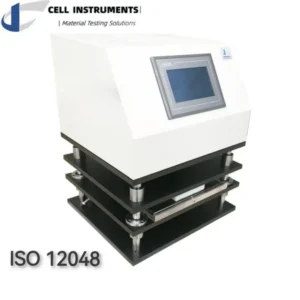
Untuk melaksanakan dengan andal pengujian kantong infus, peralatan tersebut harus menjamin ketepatan, umpan balik data secara real-time, dan kesesuaian dengan protokol pengujian internasional. Sebuah peralatan berkualitas tinggi alat uji kompresi kantong infus seperti yang dari Cell Instruments Co, Ltd. memastikan hasil yang akurat dan dapat diulang.
Fitur Utama Peralatan:
Pelat kompresi atas dan bawah untuk distribusi gaya yang seimbang
Sistem yang dikendalikan PLC agar pengoperasiannya stabil
Layar sentuh HMI agar konfigurasi pengujian menjadi lebih mudah
Pengukuran gaya secara real-time dan pembuatan grafik kurva
Kompensasi tekanan konstan otomatis
Baki penampung cairan untuk mengumpulkan cairan yang bocor dengan aman
Ukuran pelat yang dapat disesuaikan agar sesuai dengan berbagai ukuran tas
Opsional Konektivitas RS232 dan perangkat lunak untuk ekspor data
Fitur-fitur ini sangat penting terutama saat melakukan pengujian bahan film fleksibel umumnya digunakan pada kantong infus.
Standar Pengujian Kompresi Kantong Infus
Uji kompresi terhadap kantong infus harus mengikuti standar yang diakui oleh industri untuk memastikan kepatuhan internasional. Salah satu yang paling relevan adalah ISO 12048, yang menguraikan prosedur pengujian untuk kemasan pengangkutan yang telah diisi.
ISO 12048 dan Standar Terkait:
Kecepatan kompresi: (10 ± 3) mm/menit
Akurasi kekuatan: ±2%
Paralelisme pelat: dalam batas toleransi 1:1000
Pengkondisian: 23°C, kelembapan relatif 50% selama minimal 48 jam
Pengumpulan data: Kurva gaya-deformasi kontinu
Pelaporan: Gaya puncak, deformasi, dan deskripsi mode kegagalan
Dengan menerapkan standar-standar ini, para penguji dapat dengan yakin menilai apakah kantong infus akan tahan terhadap penumpukan atau tekanan tanpa mengalami kerusakan.
Manfaat Menggunakan Alat Uji Kompresi Kantong Infus dari Cell Instruments
The Penguji Kompresi Paket Produk dari Cell Instruments ini dirancang khusus untuk aplikasi pengemasan di bidang medis dan farmasi. Produk ini mendukung kedua beban maksimum dan ketahanan terhadap tekanan konstan pengujian, yang memberikan fleksibilitas untuk berbagai skenario penggunaan.
Direkomendasikan untuk pengujian:
Kantong infus dan kantong darah
Botol infus plastik
Kantong es dan kantong komposit
Unit farmasi yang dibungkus dengan plastik film
Dengan kepatuhan terhadap standar industri dan akurasi pengukuran yang tinggi (±1% FS), perangkat ini sangat cocok untuk laboratorium jaminan mutu, Bagian Penelitian dan Pengembangandan lembaga sertifikasi berfokus pada keamanan dan kinerja kemasan.
Gambaran Umum Prosedur Pengujian untuk Kantong Infus
Langkah 1: Pemanasan
Stabilkan sampel dalam lingkungan dengan suhu dan kelembapan yang terkendali pada 23°C dan kelembapan relatif 50% selama minimal 48 jam.
Langkah 2: Pengaturan
Letakkan tas tersebut tepat di tengah-tengah antara pelat kompresi paralel. Pastikan sistem telah dikalibrasi dan fitur penghentian darurat telah diaktifkan.
Langkah 3: Menguji Konfigurasi
Pilih salah satu dari:
Mode burst: Kompres hingga pecah
Tekanan yang terus-menerus: Menerapkan gaya yang telah ditentukan selama waktu tertentu
Tentukan batas kecepatan dan beban sesuai dengan standar pengujian yang dipilih.
Langkah 4: Pelaksanaan dan Pemantauan
Mulai pengujian. Mesin tersebut memberikan tekanan vertikal sambil mencatat data data gaya dan perpindahan secara terus-menerus.
Langkah 5: Interpretasi Data
Analisis kurva gaya-regangan untuk menentukan:
Beban puncak
Jenis kegagalan (pecah, bocor, deformasi)
Ketahanan kemasan
Kesimpulan
Bagi para profesional di bidang kemasan medis, mengetahui cara melakukan pengujian kantong infus sangat penting untuk menjamin keselamatan pasien, kualitas produk, dan persetujuan dari pihak berwenang. Dengan menggunakan sistem yang andal alat uji kompresi kantong infus dan mengikuti standar seperti ISO 12048, Anda akan memperoleh wawasan berharga mengenai perilaku material saat mengalami tegangan dan dapat mengambil keputusan yang lebih baik dalam hal desain dan jaminan kualitas.
Cell Instruments Co, Ltd. menawarkan solusi pengujian canggih yang akurat, dapat disesuaikan, dan sesuai dengan standar. Jika Anda bergerak di bidang pengemasan infus, hubungi kami hari ini untuk mengetahui bagaimana peralatan kami dapat meningkatkan program pengujian kompresi Anda.
 ID
ID  EN
EN  AR
AR  BG
BG  CS
CS  DA
DA  DE
DE  EL
EL  ES
ES  ET
ET  FI
FI  FR
FR  HU
HU  IT
IT  JA
JA  KO
KO  LT
LT  LV
LV  NB
NB  NL
NL  PL
PL  PT
PT  RO
RO  RU
RU  SK
SK  SL
SL  SV
SV  TR
TR  UK
UK  HE
HE  TH
TH  VI
VI