
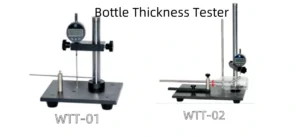
 Packaging plays a critical role in ensuring product safety, stability, and consumer satisfaction. Among the many quality parameters, bottle wall thickness is one of the most important, directly influencing container strength, barrier properties, and cost efficiency. This comprehensive bottle wall thickness guide explains why thickness testing matters, how it is measured, and how Cell Instruments can support manufacturers with advanced testing solutions.
Why Bottle Wall Thickness Matters
Consistency in bottle wall thickness is vital for multiple industries, including beverages, pharmaceuticals, cosmetics, and daily chemicals. Uneven walls can lead to issues such as leakage, deformation during filling, or breakage under pressure. In addition, manufacturers face increasing demands for lightweight packaging, where precise control of thickness ensures reduced material usage without compromising safety.
By maintaining optimal bottle wall thickness, companies can:
- Improve packaging performance and durability
- Enhance consumer safety and product integrity
- Achieve cost savings through material optimization
- Comply with international packaging standards such as ASTM D2659, ISO 8113, and ASTM D4169
PET Bottle Wall Thickness and Its Importance
PET bottle wall thickness is one of the most closely monitored parameters in the beverage and food industries. PET (polyethylene terephthalate) bottles are widely used due to their lightweight, transparency, and recyclability. However, insufficient wall thickness may cause bottles to collapse under carbonation pressure, while excessive thickness results in unnecessary material costs.
Accurate measurement of PET bottle wall thickness helps beverage manufacturers maintain strength while supporting sustainability goals. For carbonated drinks, maintaining consistent wall distribution is especially important to prevent bottle deformation during storage and transport.
Plastic Bottle Wall Thickness in Different Applications
Plastic bottle wall thickness is not limited to PET materials. HDPE, PP, and PVC bottles are also widely used across pharmaceuticals, healthcare, and household chemicals. For these industries, wall thickness plays an equally important role:
- Pharmaceutical bottles: Uniform wall thickness ensures proper sealing and protection from moisture or light.
- Cosmetic bottles: Consistency enhances aesthetics and consumer perception.
- Household chemical bottles: Thickness control improves safety, preventing leakage of potentially hazardous contents.
In each case, testing is not only about product safety but also compliance with regulatory requirements in different markets.
Methods for Measuring Bottle Wall Thickness
Manufacturers adopt different methods to measure bottle wall thickness depending on their production needs:
- Destructive testing – Cutting or sectioning bottles to measure wall thickness with calipers or microscopes. This method is accurate but not efficient for high-volume testing.
- Non-destructive testing – Advanced thickness gauges use ultrasonic or magnetic technology to measure walls without damaging the bottle. These methods allow faster, more reliable, and repeatable results.
Modern production lines increasingly rely on non-destructive thickness testers to ensure real-time quality control while reducing material waste.
Recommended Solution: Cell Instruments WTT-WALL Thickness Tester
For companies seeking precise and efficient measurement, the Cell Instruments WTT-WALL Thickness Tester offers a professional solution. It is designed to measure bottle wall thickness across PET, plastic, and glass containers with high accuracy and repeatability.
Key advantages include:
- High precision measurement for quality consistency
- Non-destructive testing, suitable for mass production lines
- Alkalmazkodóképesség to different bottle shapes and materials
- Integration with quality management systems, ensuring traceability and compliance
By adopting advanced equipment such as the WTT-WALL, manufacturers can achieve consistent results, improve production efficiency, and meet international packaging standards.
Industry Standards and Compliance
International standards guide manufacturers in maintaining reliable packaging quality. Some widely recognized references include:
- ASTM D4169 – Performance testing of shipping containers
- ASTM D2659 – Burst strength testing for bottles
- ISO 8113 – Testing procedures for plastic containers
Compliance with these standards not only enhances reliability but also strengthens brand reputation in global markets.
Következtetés
Ez a bottle wall thickness guide highlights the importance of consistent thickness measurement for ensuring safety, quality, and sustainability. Whether in the beverage, pharmaceutical, or cosmetics industry, both PET bottle wall thickness és plastic bottle wall thickness must be carefully controlled. By using advanced solutions like the Cell Instruments WTT-WALL Thickness Tester, manufacturers can optimize material use, reduce defects, and comply with international standards—ultimately delivering stronger, safer, and more sustainable packaging.
 HU
HU  EN
EN  AR
AR  BG
BG  CS
CS  DA
DA  DE
DE  EL
EL  ES
ES  ET
ET  FI
FI  FR
FR  ID
ID  IT
IT  JA
JA  KO
KO  LT
LT  LV
LV  NB
NB  NL
NL  PL
PL  PT
PT  RO
RO  RU
RU  SK
SK  SL
SL  SV
SV  TR
TR  UK
UK