
Top-Load Strength Test Method
ISO 8113
Johdanto
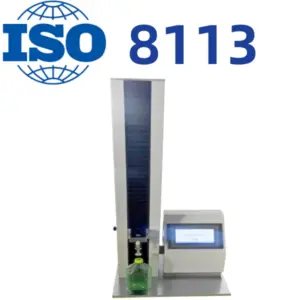
The Top-Load Strength Test Method is essential for evaluating the durability and structural integrity of glass containers under external vertical pressure.
This method is widely used across industries that rely on glass packaging, such as the beverage, pharmaceutical, and food industries. Ensuring that containers can withstand stacking and transportation pressures is critical, and the Top-Load Strength Test is an important part of this evaluation.
Understanding ISO 8113: Standard for Glass Containers’ Resistance to Vertical Load
ISO 8113 outlines the test methods for determining the resistance of glass containers to external forces applied along the vertical axis. The method helps manufacturers assess how well their glass packaging can endure physical stress during handling, stacking, and shipping. This is crucial for preventing breakage during transit, which could result in product loss or damage.
ISO 8113 focuses specifically on testing glass containers that have not been subjected to other mechanical or thermal tests. The standard sets parameters for sample preparation, test apparatus, and procedures for accurate and repeatable results.
The Top-Load Strength Test: What You Need to Know
Test Apparatus
The apparatus for conducting the Top-Load Strength Test consists of two horizontal, flat steel pressure plates. These plates exert compressive force on the glass container, applying pressure until the container either deforms or breaks. The apparatus is equipped with a protective cover to prevent container breakage from shattering and to safely contain the container during the test.
In addition, the apparatus includes pads (such as rubber sheets or folded paper) placed between the glass and the metal plates. These pads ensure even distribution of the force and prevent direct glass-to-metal contact, which could lead to inaccurate results or premature failure.
Test Procedure for Top-Load Strength Testing
-
Preparation of Test Samples:
The glass containers to be tested should be free from any glass particles or debris. The sample temperature should not differ from the ambient temperature by more than 5°C to avoid any temperature-related stress that could affect the test outcome.
-
Test Setup:
Place the container in the center of the lower pressure plate, aligning it with the centerline of the apparatus. The container should be covered with the protective cap and pads to prevent damage during the test.
-
Applying the Load:
The test is carried out by increasing the vertical load gradually. There are two types of procedures:
-
Pass Test: The force is increased until a specified value is reached. After this, the plates are withdrawn. This is done for a predetermined number of containers.
-
Total Progressive Test: The force is applied progressively until the container breaks. This test is applied to all containers in the sample.
-
-
Recording the Results:
For the pass test, the achieved force and the number of containers that failed are recorded. In the total progressive test, the force required to break each container is recorded, and statistical analysis is carried out to find the mean and standard deviation of the results.
Vertical Load Test for Glass Bottles: Why It Matters
The vertical load test is a critical part of ensuring that glass bottles can withstand the stress they will encounter in real-world conditions. In industries like beverages and pharmaceuticals, products are often stacked during transportation and storage, placing significant pressure on the containers. If a container is not able to withstand this pressure, it can crack, deform, or break, causing product loss.
Glass bottles are tested for resistance to vertical load by gradually applying pressure along the vertical axis until the container deforms or ruptures. This test simulates stacking conditions and ensures that the packaging meets the necessary standards for durability.
Vertical Compression Test: Assessing Glass Container Integrity
A vertical compression test is a method used to evaluate the resistance to compressive forces applied to the glass container. During the test, the container is subjected to increasing pressure along its vertical axis. The goal is to assess how much vertical compressive force the container can withstand before failure. This test helps manufacturers determine the structural integrity of the packaging and identify potential weaknesses.
Resistance to Vertical Load Test Method for Packaging Applications
The resistance to vertical load test method is applicable to various packaging applications. By assessing the ability of glass containers to withstand vertical forces, manufacturers can ensure that their packaging will not fail during transportation and storage. This test is particularly important for industries that rely on glass packaging, such as beverages, food, and pharmaceuticals, where product integrity is essential for both safety and quality.
Key Benefits of Conducting Top-Load Strength Tests
- Ensures Product Safety: By identifying weak points in the glass containers, manufacturers can improve packaging durability and prevent breakage during transit, ensuring product safety.
- Cost Savings: By identifying issues with the strength of containers early in the manufacturing process, manufacturers can avoid expensive product losses and recalls.
- Regulatory Compliance: Many industries have strict regulations for packaging durability. Conducting top-load tests ensures that glass containers meet these regulatory requirements, avoiding penalties and maintaining market credibility.
- Enhanced Consumer Trust: High-quality, reliable packaging contributes to customer satisfaction and brand loyalty, especially in industries like food and beverages, where product safety is paramount.
The Importance of the Top-Load Strength Test Method
The Top-Load Strength Test Method is essential for determining the ability of glass containers to withstand the forces they will encounter during handling, transport, and storage. By adhering to standards like ISO 8113, manufacturers can ensure that their packaging performs well under vertical loads, which directly impacts product safety and consumer sa
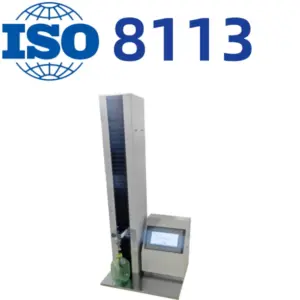
tisfaction.
For accurate and efficient testing, consider using Cell Instruments‘ Top Load Tester, which is designed to comply with ISO standards and deliver reliable, repeatable res
ults for all your vertical load testing needs.
FAQ
Q1: What does the Top-Load Strength Test Method evaluate?
A1: It evaluates the ability of glass containers to withstand external vertical compressive forces during transportation and storage.
Q2: Why is ISO 8113 important for glass container testing?
A2: ISO 8113 provides a standardized method for testing the vertical load resistance of glass containers, ensuring they meet safety and quality requirements.
Q3: How is the Top-Load Strength Test conducted?
A3: The test involves applying increasing vertical load to a glass container until it deforms or breaks, helping determine its resistance to compression.
Q4: What is the difference between the Pass Test and the Total Progressive Test?
A4: The Pass Test involves applying a specified load, while the Total Progressive Test gradually increases the force until the container breaks.
Q5: How can I ensure my glass containers meet industry standards?
A5: By conducting Top-Load Strength Tests and adhering to ISO 8113, manufacturers can ensure their containers meet the necessary durability standards for safe transportation and storage.
 FI
FI  EN
EN  AR
AR  BG
BG  CS
CS  DA
DA  DE
DE  EL
EL  ES
ES  ET
ET  FR
FR  HU
HU  ID
ID  IT
IT  JA
JA  KO
KO  LT
LT  LV
LV  NB
NB  NL
NL  PL
PL  PT
PT  RO
RO  RU
RU  SK
SK  SL
SL  SV
SV  TR
TR  UK
UK