Δοκιμή φόρτισης από πάνω – Κάθετη φόρτιση φιάλης
Δοκιμές φόρτωσης από πάνω Πρόκειται για μια βασική μηχανική αξιολόγηση που χρησιμοποιείται για να προσδιοριστεί ο βαθμός αντοχής ενός δοχείου σε συμπιεστική δύναμη που ασκείται κατά μήκος του κατακόρυφου άξονά του. Σε κλάδους συσκευασίας όπως τα ποτά, τα φαρμακευτικά προϊόντα, τα τρόφιμα και τα προϊόντα καθημερινής χρήσης, οι φιάλες πρέπει να αντέχουν σε φορτία στοίβαξης κατά τη διάρκεια της πλήρωσης, της αποθήκευσης, της μεταφοράς και της έκθεσης στα καταστήματα λιανικής. Η ανεπαρκής αντοχή σε φορτίο από πάνω συχνά οδηγεί σε παραμόρφωση, διαρροή ή κατάρρευση, επηρεάζοντας άμεσα την ασφάλεια του προϊόντος και την αξιοπιστία της μάρκας.
Από την άποψη της ποιότητας και του σχεδιασμού, οι δοκιμές φόρτωσης από πάνω συνδέουν την επιλογή των υλικών, τη γεωμετρία του περιέκτη και τις παραμέτρους επεξεργασίας με την πραγματική απόδοση.
Δοκιμή κατακόρυφου φορτίου για φιάλες: Αρχή και εφαρμογή της δοκιμής
A δοκιμή κατακόρυφου φορτίου για μπουκάλι ασκεί δύναμη συμπίεσης από την κορυφή του δοχείου με ελεγχόμενη ταχύτητα, ενώ η βάση παραμένει στηριγμένη. Η δοκιμή συνεχίζεται έως ότου επιτευχθεί ένα καθορισμένο φορτίο ή έως ότου προκύψει δομική αστοχία, ανάλογα με τον σκοπό της δοκιμής.
Η μέθοδος αυτή αξιολογεί τη συμπεριφορά της φιάλης υπό αξονική συμπίεση. Για τα γυάλινα δοχεία, η δοκιμή εστιάζει στην αντοχή σε εξωτερική κατακόρυφη δύναμη. Για τα πλαστικά δοχεία, όπως οι φιάλες PET, η δοκιμή προσδιορίζει τη συμπεριφορά κατά τη σύνθλιψη σε στήλη, συμπεριλαμβανομένου του φορτίου διαρροής, της ακαμψίας και της παραμόρφωσης.
Τα βασικά σενάρια εφαρμογής περιλαμβάνουν:
- Αξιολόγηση της δυνατότητας στοίβαξης παλετών και χαρτοκιβωτίων
- Σύγκριση σχεδίων φιαλών κατά τη διάρκεια της έρευνας και ανάπτυξης
- Τακτικός έλεγχος ποιότητας στις γραμμές παραγωγής
- Επαλήθευση της συμμόρφωσης με τις προδιαγραφές του πελάτη ή τις κανονιστικές απαιτήσεις
Κορυφαίος ελεγκτής φορτίου για φιάλες PET
A συσκευή δοκιμής φόρτωσης από την κορυφή για φιάλες PET πρέπει να λαμβάνει υπόψη την όλκιμη συμπεριφορά των θερμοπλαστικών υλικών. Τα δοχεία από PET συνήθως παραμορφώνονται πριν από τη θραύση, γεγονός που καθιστά το φορτίο διαρροής και την ακαμψία ιδιαίτερα σημαντικούς δείκτες.
Κατά τη διάρκεια των δοκιμών, η σωστή ευθυγράμμιση του άξονα της φιάλης και ο επαρκής εξαερισμός είναι ζωτικής σημασίας. Οι μεταβολές της εσωτερικής πίεσης του αέρα μπορούν να επηρεάσουν τα αποτελέσματα των μετρήσεων και, σε ακραίες περιπτώσεις, να δημιουργήσουν κινδύνους για την ασφάλεια. Ως εκ τούτου, ο ελεγχόμενος εξαερισμός βελτιώνει τόσο την ακρίβεια όσο και την ασφάλεια του χειριστή.
Οι δοκιμές φόρτωσης από την κορυφή σε PET μπουκάλια χρησιμοποιούνται ευρέως για:
- Βελτιστοποίηση σχεδίων ελαφριών φιαλών
- Σύγκριση τύπων ρητίνης ή συνθηκών επεξεργασίας
- Παρακολούθηση της ομοιογένειας μεταξύ των παρτίδων παραγωγής
ASTM D2659: Ιδιότητες θραύσης σε στήλη πλαστικών δοχείων
ASTM D2659 καθορίζει μια τυποποιημένη μέθοδο μέτρησης των ιδιοτήτων θραύσης υπό πίεση των φυσητών θερμοπλαστικών δοχείων. Η μέθοδος ορίζει σταθερούς ρυθμούς παραμόρφωσης υπό συμπίεση και δίνει έμφαση στη σχέση μεταξύ φορτίου και παραμόρφωσης.
Το πρότυπο επισημαίνει διάφορα σημαντικά αποτελέσματα, μεταξύ των οποίων φορτίο διαρροής κατά τη σύνθλιψη, παραμόρφωση κατά τη διαρροή και φαινομενική ακαμψία κατά τη σύνθλιψη. Επιπλέον, διευκρινίζει ότι τα δεδομένα δοκιμών αντικατοπτρίζουν τη συμπεριφορά υπό καθορισμένες συνθήκες και πρέπει να ερμηνεύονται με προσοχή όταν εφαρμόζονται σε διαφορετικά σενάρια χρόνου φόρτωσης.
ISO 8113: Αντοχή των γυάλινων δοχείων σε κατακόρυφα φορτία
ISO 8113 εστιάζει στην αντοχή των γυάλινων δοχείων σε κατακόρυφες εξωτερικές δυνάμεις. Η μέθοδος καθορίζει τις διαδικασίες προετοιμασίας, ευθυγράμμισης και φόρτωσης των δειγμάτων, προκειμένου να διασφαλιστεί η αξιόπιστη αξιολόγηση.
Το πρότυπο επιτρέπει τόσο τη διεξαγωγή δοκιμών επιτυχίας υπό καθορισμένη δύναμη όσο και τη διεξαγωγή προοδευτικών δοκιμών μέχρι τη θραύση. Οι ελεγχόμενοι ρυθμοί φόρτωσης και η ορθή χρήση των επιθεμάτων ή των μηχανισμών κλεισίματος συμβάλλουν στη μείωση της μεταβλητότητας και στην προσομοίωση πραγματικών συνθηκών συσκευασίας.
Κορυφαίος εξοπλισμός δοκιμών φόρτωσης για φιάλες: Εξοπλισμός και βασικές παράμετροι
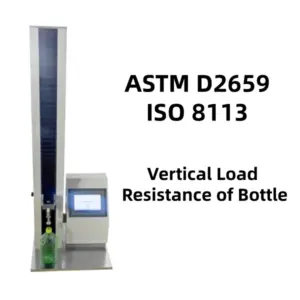
A συσκευή δοκιμής φόρτωσης από πάνω για φιάλες εξασφαλίζει ελεγχόμενη εφαρμογή δύναμης, ακριβή μέτρηση της μετατόπισης και επαναλαμβανόμενες συνθήκες δοκιμής. Τα σύγχρονα συστήματα χρησιμοποιούν έλεγχο με σερβομηχανισμό ή PLC για τη διατήρηση σταθερής ταχύτητας δοκιμής και τη διασφάλιση της αξιοπιστίας των δεδομένων.
Οι τυπικές παράμετροι απόδοσης περιλαμβάνουν:
- Εύρος δύναμης κατάλληλο για ελαφριές πλαστικές φιάλες ή γυάλινα δοχεία υψηλής αντοχής
- Έλεγχος ταχύτητας δοκιμής για να πληρούν τις προδιαγραφές
- Υψηλή ανάλυση μετατόπισης για την ακριβή ανάλυση της παραμόρφωσης
- Έξοδος ψηφιακών δεδομένων για την ιχνηλασιμότητα και την υποβολή εκθέσεων
Για παράδειγμα, οι κορυφαίες λύσεις δοκιμών φόρτωσης της Cell Instruments υποστηρίζουν ευρύ φάσμα δυνάμεων, ρυθμιζόμενες ταχύτητες και προαιρετικές διεπαφές δεδομένων, επιτρέποντας στα εργαστήρια να προσαρμόζουν ένα σύστημα σε πολλαπλά μεγέθη δοχείων.
 EL
EL  EN
EN  AR
AR  BG
BG  CS
CS  DA
DA  DE
DE  ES
ES  ET
ET  FI
FI  FR
FR  HU
HU  ID
ID  IT
IT  JA
JA  KO
KO  LT
LT  LV
LV  NB
NB  NL
NL  PL
PL  PT
PT  RO
RO  RU
RU  SK
SK  SL
SL  SV
SV  TR
TR  UK
UK  HE
HE  TH
TH  VI
VI