
ASTM D6653
Vacuum Leak Test
Der ASTM D6653 standard outlines a method for testing the integrity of packaging systems exposed to high-altitude conditions. This test is crucial for determining how products and their packaging systems perform under pressure differentials encountered during transport, especially in feeder aircraft traveling over high mountain passes. The vacuum leak test method, specified in this standard, evaluates the durability of packaging systems under such pressure changes.
Understanding ASTM D6653 and Its Significance
ASTM D6653 is the standard test method for evaluating the effects of high-altitude conditions on packaging systems. The test simulates the pressure differentials products experience during transport by air, such as in feeder aircraft, which may reach altitudes of 5,791 meters (19,000 feet) or higher. The test method primarily assesses vacuum leak detection in packaging systems that need to maintain their integrity when subjected to these extreme conditions.
This test is essential for packaging manufacturers, especially those working with sensitive products, including pharmaceuticals, medical devices, or food, where packaging integrity is critical. By simulating real-world conditions, the test ensures that the packaging system will not fail or allow contamination due to pressure changes.
Key Components of the ASTM D6653 Test Method
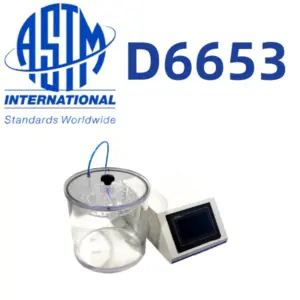
Der vacuum leak test beschrieben in ASTM D6653 involves subjecting a test specimen, which is an assembled packaging system, to a simulated high-altitude environment. The pressure differential causes the packaging system to expand, and its integrity is tested by measuring the vacuum integrity and any leakage or deformation that may occur.
Apparatus Required for the Test
The following equipment is required for the vacuum leak test:
-
Vacuum Chamber – A chamber capable of withstanding a pressure differential of approximately one atmosphere. This chamber must have a vacuum-tight cover and be large enough to contain the test specimen while allowing for expansion.
-
Vacuum Gauge and Source – A high-precision vacuum gauge with a range of 0 to 100 kPa (0 to 30 in. Hg), accuracy of ±2%, and an inlet tube from a vacuum source and an outlet tube to the atmosphere.
-
Vacuum Controls – Manual valves to control the release and application of vacuum at a specified rate.
Procedure for Conducting the Test
-
Specimen Preparation:
The packaging system to be tested is carefully prepared, ensuring it reflects a typical production run. The test specimen is conditioned at 5.6 ± 2°C [42 ± 3.6°F] for at least 24 hours. -
Vacuum Chamber Setup:
Place the specimen into the vacuum chamber, ensuring the chamber is sealed. The chamber’s inlet valve is closed, and the outlet valve is opened to apply vacuum. -
Pressure Application:
The vacuum is applied at a rate of approximately 305 meters (1,000 feet) per 30–60 seconds. The pressure inside the chamber is brought down to a level equivalent to an altitude of 16,000 feet ±5% for a standard test. -
Test Duration:
The specimen is exposed to this vacuum for 60 minutes, simulating the effects of high-altitude transport. -
Release of Vacuum:
After the test duration, the vacuum is released slowly, and the specimen is inspected for any signs of damage or deformation.
Evaluation of Results
After the test, the packaging system is carefully examined for any signs of leakage oder deformation. If the packaging maintains its integrity without significant deformation or leakage, it passes the test, indicating it can withstand high-altitude conditions during transport. If the specimen shows signs of failure, manufacturers can assess whether the pressure differential affected the seams or the integrity of the package.
Why Is Vacuum Leak Testing Important for Packaging?
Packaging plays a crucial role in protecting products, especially in industries like pharmaceuticals and food. Vacuum leak testing ensures that packaging can withstand pressure changes, ensuring products remain safe and uncontaminated during transport.
For manufacturers, ASTM D6653 provides valuable data on packaging performance under extreme conditions. By using this test, businesses can verify that their packaging solutions meet industry standards for high-altitude shipping and prevent potential product failures.
Abschluss
Der vacuum leak test skizziert in ASTM D6653 is a critical procedure for manufacturers and quality control professionals to assess the integrity of packaging systems. By simulating high-altitude conditions, this test helps ensure that products remain safe and intact during transport. Utilizing Cell Instruments’ leak testers, manufacturers can accurately perform these tests, ensuring that their packaging systems meet the rigorous demands of modern transportation and distribution networks.
Häufig gestellte Fragen
Q1: What is ASTM D6653 and why is it important for packaging systems?
A1:
ASTM D6653 is a standard test method that evaluates the effect of high-altitude conditions on packaging systems, especially for products transported by aircraft over high mountain passes. This test simulates the pressure differentials that occur when packaging systems are exposed to high altitudes, ensuring that the packaging maintains its integrity and prevents damage during transit. It is crucial for packaging systems in industries such as pharmaceuticals, food, and electronics, where packaging failure could compromise product safety or quality.
Q2: How does the vacuum leak test in ASTM D6653 work?
A2:
The vacuum leak test in ASTM D6653 works by subjecting a packaged product to a simulated high-altitude environment within a vacuum chamber. The test involves applying a vacuum to the packaging system to simulate the pressure differential experienced during air transport at high altitudes. The packaging is then inspected for any signs of deformation, leakage, or failure after exposure to the vacuum. This helps determine whether the packaging can withstand pressure changes without compromising its ability to protect the product.
Q3: What are the key apparatus required for performing ASTM D6653 vacuum leak tests?
A3:
To perform ASTM D6653 vacuum leak tests, the following equipment is necessary:
- Vacuum Chamber: A chamber capable of withstanding approximately one atmosphere pressure differential with a vacuum-tight cover.
- Vacuum Gauge: A laboratory-quality vacuum gauge with a range of 0 to 100 kPa (0 to 30 in. Hg) and an accuracy of ±2%.
- Vacuum Source and Control: Inlet and outlet tubes, equipped with hand-operated valves, to control the vacuum application and release.
-
Sample Holder: A holder large enough to hold the test specimen and allow for expansion during the test.
Q4: How long should a vacuum leak test last according to ASTM D6653?
A4:
According to ASTM D6653, the vacuum leak test should last for 60 minutes, during which the test specimen is exposed to the vacuum pressure equivalent to a high altitude (such as 16,000 feet ± 5%). This time allows for sufficient simulation of the conditions that a package might experience during transport through high-altitude regions.
Q5: What are the critical results to look for after performing a vacuum leak test?
A5:
After conducting the vacuum leak test, the critical results to examine include:
- Deformation: Check if the packaging has deformed due to pressure changes. Packaging that expands or changes shape significantly may be compromised.
- Leakage: Inspect the package for any signs of leakage, which would indicate a failure in maintaining the integrity of the sealed packaging.
- Structural Integrity: Ensure that all seams, closures, and components of the packaging remain intact without any visible cracks or failures.
If no significant damage or leakage is observed, the packaging system can be considered suitable for high-altitude transport.
 DE
DE  EN
EN  AR
AR  BG
BG  CS
CS  DA
DA  EL
EL  ES
ES  ET
ET  FI
FI  FR
FR  HU
HU  ID
ID  IT
IT  JA
JA  KO
KO  LT
LT  LV
LV  NB
NB  NL
NL  PL
PL  PT
PT  RO
RO  RU
RU  SK
SK  SL
SL  SV
SV  TR
TR  UK
UK