
Тест за разкъсване на Елмендорф
ASTM D1424
Understanding the Elmendorf Tearing Test: ASTM D1424 for Evaluating Fabric Tear St
rength
Сайтът Elmendorf tearing test, defined under ASTM D1424, is an essential method used to evaluate the tear strength и tear propagation resistance of material
s such as fabrics and plastic films. This test is crucial in various industries, particularly for ensuring the durability of packaging materials, textiles, and medical devices. In this article, we explore the Elmendorf tearing test procedure, how it works, and its significance in assessing fabric tear strength.
What is the Elmendorf Tearing Test (ASTM D1424)?
Сайтът Elmendorf tearing test is a widely accepted method used to determine the force required to propagate a tear in materials, especially fabrics and plastic films. This test uses a falling-pendulum apparatus to apply a constant force to the material, measuring the force needed to extend a tear from a pre-cut slit. The ASTM D1424 standard outlines the specific conditions and procedures for conducting the test.
The test primarily focuses on evaluating materials’ ability to resist tearing under applied force, making it an important factor for determining the durability of variou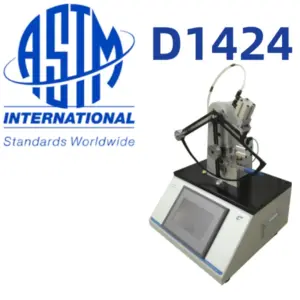 s products, including packaging films, textiles, and medical device materials.
ASTM D1424 Test Method and Procedure
Сайтът ASTM D1424 standard specifies the following test procedure:
- Specimen Preparation: A slit is made in a fabric or film sample. The specimen is held between two clamps, and the material is pulled to propagate the tear.
- Test Equipment: The falling-pendulum apparatus, which is calibrated according to ASTM D1424, is used. The pendulum applies a force that tears the material, and the required force is calculated based on the pendulum’s movement and scale readings.
- Test Conditions: The material is tested under standardized conditions, with specific guidance on sample size, test speeds, and environmental settings such as temperature and humidity.
- Data Collection: The force required to propagate the tear is recorded using load-time charts or microprocessor-based data collection systems.
Key Benefits of the Elmendorf Tear Test
- Fabric Tear Strength: This test allows for accurate measurement of a fabric’s tear strength, an essential characteristic for determining how well materials can withstand mechanical stresses without tearing.
- Многофункционалност: While commonly used for fabrics, ASTM D1424 also applies to thin plastic films and sheeting, ensuring consistent testing across different material types.
- Standardization: The test follows strict guidelines, ensuring that results are reproducible across laboratories, making it reliable for quality control and commercial acceptance testing.
- Quality Assurance: By using the Elmendorf tear test, manufacturers can ensure that their materials meet industry standards for durability, providing confidence that products will perform as expected in real-world conditions.
Elmendorf Tear Tester Procedure
Сайтът Elmendorf Tear Tester follows a simple yet effective procedure for measuring tear propagation resistance:
- Clamping: The test specimen is secured in the tester’s grips, with the tear initiating at a pre-slit point.
- Tearing Process: The pendulum is released to apply a fixed force to the specimen. As the tear propagates, the force required to continue the tear is recorded.
- Измерване: The tear strength is quantified based on the maximum force observed during the test, providing insights into the material’s resistance to tearing.
- Repeatability: Multiple specimens are tested to ensure reliable and reproducible results.
Why is Fabric Tear Strength Important?
Fabric tear strength is an essential property for materials used in products that require high durability, such as:
- Packaging Materials: Films and sheeting that must resist punctures and tears during handling, storage, and transportation.
- Textiles: Clothing and upholstery materials need to maintain integrity over time.
- Медицински изделия: Packaging for medical instruments and supplies must prevent tears to protect sterility and prevent contamination.
Testing for tear strength ensures that the materials used in these applications meet the required performance standards.
Заключение
Сайтът Elmendorf tear test, defined under ASTM D1424, is a crucial method for evaluating the tear strength и tear propagation resistance of fabrics, plastic films, and other materials. By using this test, manufacturers can ensure the reliability and durability of their products, which is vital for industries like packaging, medical devices, and textiles. Understanding and applying ASTM D1424 is essential for maintaining quality assurance and meeting industry standards.
For accurate fabric tear strength testing, Cell Instruments offers advanced Tearing Testers designed to meet the highest standards, ensuring consistent, reproducible results for quality control and material testing.
ЧЕСТО ЗАДАВАНИ ВЪПРОСИ
Q1: What is the Elmendorf Tear Test (ASTM D1424), and how does it work?
A1: The Elmendorf Tear Test, also known as ASTM D1424, is a standardized method used to measure the tear strength и tear propagation resistance of fabrics and plastic films. It involves applying a force to a pre-cut slit in the material, using a falling-pendulum apparatus to propagate the tear. The test measures the force required to continue tearing the material, providing valuable data on its durability and resistance to tearing under applied stress. This test is widely used in quality control, particularly for packaging, textile, and medical device materials.
Q2: Why is the Elmendorf Tear Test important for evaluating plastic films?
A2: The Elmendorf Tear Test is crucial for evaluating plastic films because it assesses how well the material can resist tearing when subjected to mechanical forces. Since plastic films are widely used in packaging, food, and medical industries, it is essential to understand their durability. The ASTM D1424 method helps determine how resistant a film is to tears, ensuring that it can withstand stresses without compromising its integrity. This is especially important in applications where the material must maintain its strength during transportation, storage, or use.
Q3: What materials can be tested using ASTM D1424?
A3: ASTM D1424 is primarily used for testing materials that are 1 mm (0.04 in.) or less in thickness, such as plastic films и thin sheeting. The method is suitable for various fabric types, including woven fabrics, blankets, napped fabrics, pile fabrics, and airbag fabrics. It can be applied to both untreated and treated materials, including those that are coated, resin-treated, or heavily sized. This test helps determine the tear resistance of materials in various industries like packaging, textiles, and medical products.
Q4: How does the Elmendorf Tear Test differ from other tear test methods?
A4: The Elmendorf Tear Test (ASTM D1424) differs from other tear test methods because it uses a falling-pendulum apparatus to apply a constant force to propagate a tear in a material. The force required to continue the tear is measured and recorded on a scale. Unlike some other methods, the Elmendorf tear test provides precise data on the tear propagation resistance, making it particularly suitable for materials like plastic films и thin sheeting. Other tear tests, such as the Griffith Tear Test or Trouser Tear Test, may use different testing mechanisms and are more suited for thicker fabrics or different material characteristics.
Q5: What industries benefit most from using the ASTM D1424 Elmendorf Tear Test?
A5: The ASTM D1424 Elmendorf Tear Test is highly beneficial for industries that require durable materials, particularly those in the packaging, medical, textile, and automotive sectors. Some key industries that benefit include:
-
Опаковка: To ensure that films and sheeting used for packaging can withstand physical stress without tearing.
-
Textiles: For evaluating the durability of fabrics used in clothing, upholstery, and industrial applications.
-
Медицински изделия: To test the tear resistance of packaging materials used for medical equipment and supplies, ensuring they maintain integrity during handling and storage.
-
Automotive: For testing the tear resistance of materials used in airbags, seat covers, and other automotive applications.
Q6: How can the Elmendorf Tear Test be used in quality control for fabric manufacturers?
A6: The Elmendorf Tear Test is an essential tool in quality control for fabric manufacturers. By using this test, manufacturers can ensure that their fabrics meet the required tear strength standards before shipment. The ASTM D1424 method provides consistent, reproducible results that can be used to assess whether a batch of fabric meets industry standards. This is critical for ensuring that fabrics used in high-stress applications, such as upholstery, medical devices, and protective clothing, perform reliably and maintain their integrity during use.
Q7: Can the Elmendorf Tear Test be used for wet materials?
A7: Yes, the Elmendorf Tear Test (ASTM D1424) can be applied to both wet and dry materials. Instructions are provided for testing specimens with or without wetting, making it suitable for assessing how materials perform under different environmental conditions. This is particularly useful in industries such as packaging, where materials may be exposed to moisture or wet environments, and it’s essential to understand how the material’s tear resistance changes when wet.
 BG
BG  EN
EN  AR
AR  CS
CS  DA
DA  DE
DE  EL
EL  ES
ES  ET
ET  FI
FI  FR
FR  HU
HU  ID
ID  IT
IT  JA
JA  KO
KO  LT
LT  LV
LV  NB
NB  NL
NL  PL
PL  PT
PT  RO
RO  RU
RU  SK
SK  SL
SL  SV
SV  TR
TR  UK
UK