
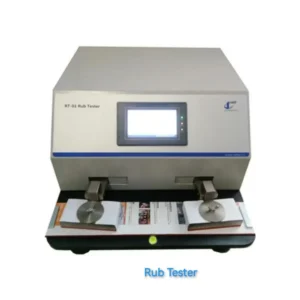
Ink Rub TestInk
Essential for Assessing Ink Durability on Packaging Materials
Ink durability is a crucial quality attribute in packaging, printing, and labeling industries. The ink rub test plays a vital role in evaluating how well ink films withstand friction or abrasion that occurs during handling, transportation, and everyday use. Accurate testing guarantees product appearance, integrity, and consumer trust.
Rub Resistance Tester and Ink Abrasion Resistance Test Based on ASTM D5264
To achieve reliable results, the ink abrasion resistance test standardized by ASTM D5264 is widely used. This method simulates the rubbing or abrasion that printed inks and coatings face on substrates like paper, cardboard, plastic films, and other materials. The rub resistance tester is the instrument designed to perform this test, precisely applying repetitive friction strokes to evaluate ink durability on various surfaces.
الفهم ASTM D5264 – Ink Abrasion Resistance Test
ASTM D5264 outlines procedures to measure resistance of printed inks and coatings to abrasion by applying controlled rubbing under specified pressure, stroke rates, and conditions. The test differentiates between dry and wet rubbing, helping identify potential ink transfer, smearing, or fading issues critical for packaging quality control. It ensures the ink can maintain its appearance and legibility during normal handling[Reference to Cell Instruments expertise.
Why Conduct the Ink Rub Test?
-
Maintains Consumer Trust: Prevents ink smearing or wear that could obscure essential product information or branding on packaging.
-
Ensures Product Longevity: Validates that ink and coating layers resist abrasion, heat, and moisture, critical for packaging in harsh environments.
-
Reduces Costs: Early detection of weak ink films minimizes returns and product recalls, saving time and resources.
How to Perform the Ink Rub Test Effectively
-
Prepare Samples: Condition printed materials under standard lab conditions to stabilize ink properties.
-
Set Up the Rub Resistance Tester: Configure according to ASTM D5264 parameters—load pressure, number of rub cycles, speed, and environment (dry/wet).
-
Run the Test: The machine repeatedly rubs an abrasive cloth or a specified rubbing material over the ink surface.
-
Evaluate Results: Inspect for ink transfer, abrasion marks, fading, or loss of gloss. Quantify abrasion resistance by the number of cycles endured before damage appears.
-
Report and Optimize: Use data to improve ink formulations or substrate compatibility, and confirm compliance with packaging standards.
A specialized instrument like the Cell Instruments RT-01 Rub Tester offers advanced functionalities for these tests, including dry rub, wet rub, and heated rub options, simulating real-world handling conditions and ensuring versatile performance across industries.
Expanding Applications in Packaging and Material Testing
Besides ink assessment, rub resistance testers help evaluate coatings on labels, paper and cardboard containers, plastic films, and medical device packaging materials. These industries rely on such testing to ensure:
-
Clear label legibility throughout product shelf life.
-
Durability of protective coatings on pharmaceutical or food packaging.

-
Compliance with regulatory and quality standards.
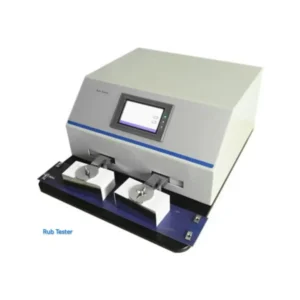
Ideal for: packaging manufacturers, label producers,printing houses, quality-control labs.Automation and customization services offered by Cell Instruments streamline the testing process, meeting unique client requirements for various materials, from textiles to electronics.
خاتمة
By integrating the ink rub test into your quality control workflow with tools like the جهاز اختبار الاحتكاك RT-01, you gain confidence that inks and coatings will withstand the stresses encountered in the supply chain and consumer use. This not only protects product aesthetics but also upholds functional integrity and brand reputation, supporting the broad spectrum of industries served by أدوات الخلية.Continuous testing ensures compliance with international standards, reducing risks of product recalls and customer complaints while minimizing waste from defective prints to enhance sustainability.Through advanced rub testers, manufacturers obtain repeatable, data-driven results that continuously improve print durability while strengthening market competitiveness and consumer brand trust.
 AR
AR  EN
EN  BG
BG  CS
CS  DA
DA  DE
DE  EL
EL  ES
ES  ET
ET  FI
FI  FR
FR  HU
HU  ID
ID  IT
IT  JA
JA  KO
KO  LT
LT  LV
LV  NB
NB  NL
NL  PL
PL  PT
PT  RO
RO  RU
RU  SK
SK  SL
SL  SV
SV  TR
TR  UK
UK